


Ultimate Guide to Filter Dryer Crystallizer Tank for API Manufacturing
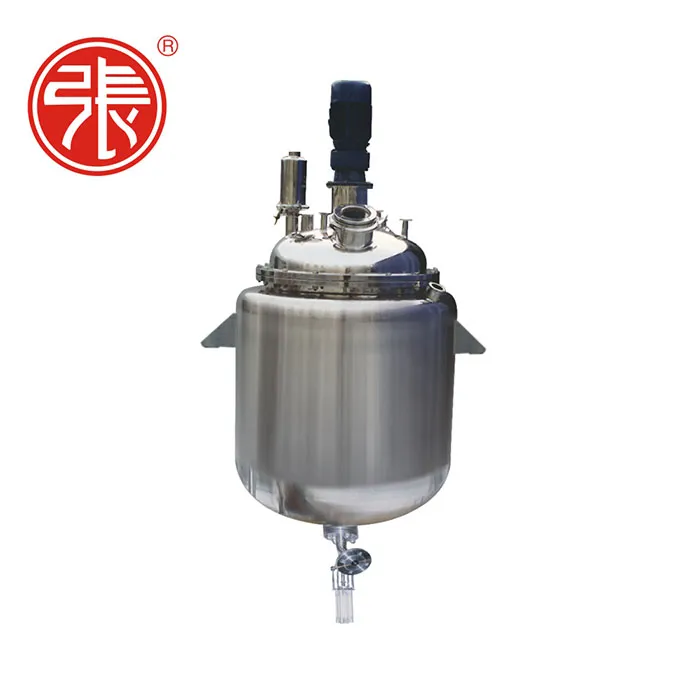
In the meticulously controlled world of Active Pharmaceutical Ingredient (API) manufacturing, the journey from chemical synthesis to a pure, marketable substance is one of precision and purification. At the heart of this critical path often lies a single, multifaceted piece of equipment: the filter dryer crystallizer tank. This integrated unit represents a paradigm shift from traditional, disjointed processes, combining three vital steps—crystallization, solid-liquid separation, and drying—into one contained environment. For process engineers and plant managers, mastering this technology is not merely an operational task; it is a strategic lever for enhancing purity, yield, and regulatory compliance. This guide demystifies the unit's role, critical features, and operational best practices specifically for the high-stakes arena of API production.
The Core Mission: Purity Through Isolation
The primary objective in API manufacturing is isolating the target molecule in its purest possible crystalline form, free from impurities, solvents, and unwanted polymorphs. The filter dryer crystallizer tank is engineered specifically for this mission. By containing the entire isolation process within a single, sealed vessel, it eliminates the need for intermediate transfers. This is of paramount importance, as each transfer of wet cake between equipment is a major risk point for contamination, exposure of potent compounds to operators, and product loss. The tank's design ensures that the delicate API crystals, once formed, are not subjected to physical stress or environmental exposure until they are rendered into a stable, dry powder, directly safeguarding the batch's integrity and potency.
Crystallization: Where Molecular Destiny is Sealed
The process begins with crystallization, arguably the most critical step for defining API quality. Within the tank, supersaturation is carefully induced, typically through controlled cooling or anti-solvent addition. The vessel's precise temperature control via jacketing is crucial here. The goal is to promote the growth of a consistent, stable crystal form (the desired polymorph) of appropriate size and shape. This crystal habit directly impacts downstream processes and the final drug product's performance, influencing factors like bioavailability, filterability, and flow properties. A well-executed crystallization in this controlled environment sets a solid foundation, quite literally, for all subsequent steps.
The Integrated Filtration and Washing Advantage
Once crystallization is complete, the mother liquor—now a solvent containing soluble impurities and unreacted starting materials—must be removed. Here, the integrated filter at the tank's base comes into play. The slurry is drained, leaving a defined "cake" of API crystals. The true power of integration is then demonstrated in the washing phase. Fresh, pure solvent can be introduced to reslurry the cake, and the system can re-filter, effectively displacing the impure mother liquor trapped within the crystal matrix. This can be repeated multiple times without ever opening the vessel or moving the solids, ensuring impurities are thoroughly removed to meet stringent pharmacopeial standards, all while maximizing recovery of the valuable API.
Gentle Drying: Preserving Potency and Structure
The final phase within the tank is drying. Applying heat through the jacket and a vacuum from above, residual solvent is removed from the filter cake. The integrated agitator, often in a special "plough" or lifting mode, gently lifts and turns the solids. This action exposes new surfaces to the heated walls and vacuum, enabling uniform and efficient drying without the need for high temperatures that could degrade a heat-sensitive API. This gentle, contained drying is essential for preserving the crystal structure, preventing the formation of amorphous content, and ensuring the final API powder has the correct moisture content, stability, and handling characteristics for formulation.
Critical Design Features for API Suitability
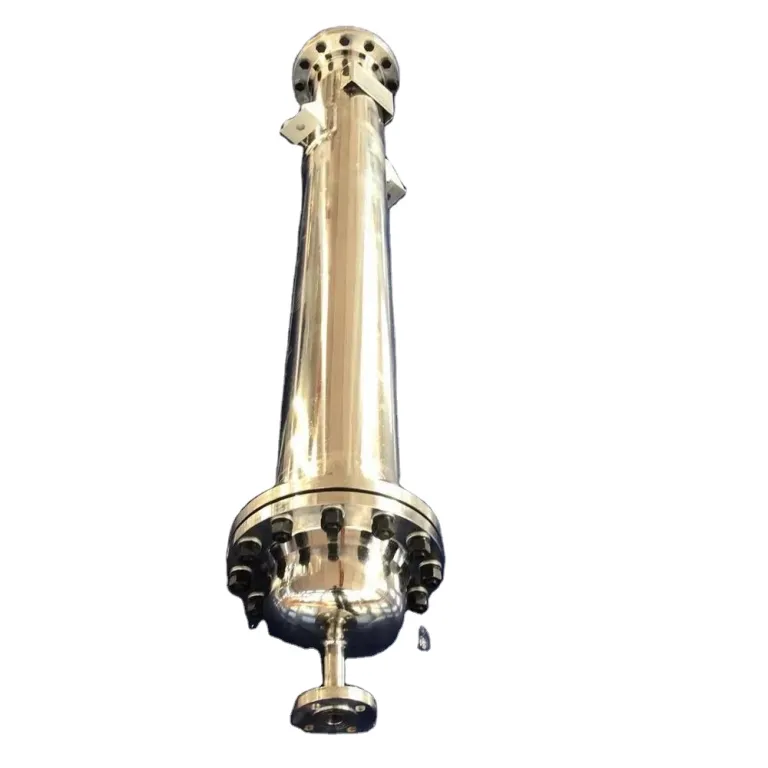
Not all filter dryer crystallizer tank are created equal for API service. Key design features are non-negotiable. The vessel must be constructed of high-grade, corrosion-resistant stainless steel (typically 316L) with an electropolished interior finish for cleanability and to prevent contamination. The filter media must be robust, often a sintered metal plate, with a pore size rating that retains the smallest crystals. Agitator seals must be designed to handle full vacuum and prevent leakage—mechanical seals with clean-in-place flush systems are standard. Furthermore, the system must support full containment for potent compound handling, with appropriate valve technology for safe product discharge.
Process Analytical Technology Integration
Modern API manufacturing demands real-time quality assurance. The filter dryer crystallizer is increasingly becoming a hub for Process Analytical Technology (PAT). Probes can be integrated to monitor critical parameters in-situ: particle size analyzers (like FBRM) to track crystal growth during crystallization, and spectroscopic probes (like ATR-IR) to monitor solvent composition and confirm drying endpoint. This data-rich environment enables a shift from fixed-time batch processing to a science-based approach where each step proceeds until a measurable quality attribute is achieved, enhancing consistency and supporting Quality by Design (QbD) principles.
Validation and Operational Excellence
Implementing this technology in a GMP environment requires rigorous validation. This includes Installation Qualification (IQ) to verify correct installation, Operational Qualification (OQ) to demonstrate performance across its operating ranges, and Performance Qualification (PQ) to prove it consistently produces API meeting pre-defined specifications when using the actual process. Beyond validation, operational excellence hinges on detailed SOPs for operation and, critically, cleaning. Robust Clean-in-Place (CIP) protocols are essential to prevent cross-contamination between API batches, making the cleanability of the vessel's design a paramount consideration during equipment selection.
A Strategic Asset for Modern API Facilities
Ultimately, the filter dryer crystallizer tank is more than just a piece of process equipment; it is a strategic asset for any API manufacturer. It reduces operational footprint, minimizes manual handling, enhances operator safety, and provides unparalleled control over the most critical purification steps. By delivering a higher purity product with greater batch-to-batch consistency and a fully contained, auditable process, it directly addresses the core challenges of modern pharmaceutical manufacturing. For companies aiming to build efficient, compliant, and future-ready API production lines, understanding and leveraging this integrated technology is not just advantageous—it is essential.

 English
 Arabic
 French
 Spanish
 Portuguese
 Deutsch
 Turkish
 Dutch
Dutch
 Italiano
 Russian
 Romaian
 Portuguese (Brazil)