


How Coworking Spaces Use Sound Absorbing Artwork to Keep Shared Offices Productive
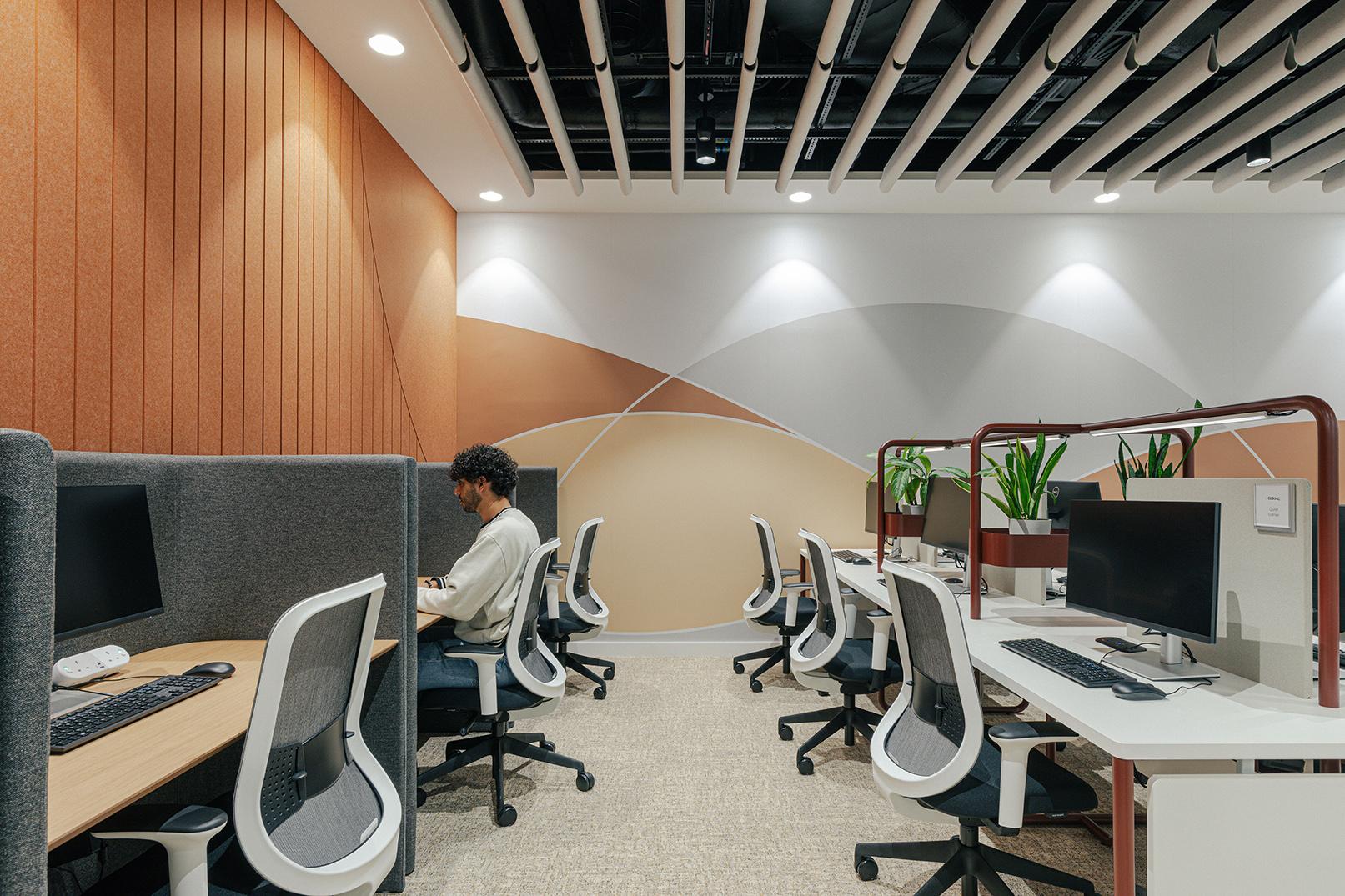
The coworking model was built on a promise: give independent professionals, small teams, and remote workers access to a well-designed office without the overhead of a private lease. That promise has fueled extraordinary growth. Thousands of coworking spaces now operate across the country, and the industry continues to expand as flexible work arrangements become the norm rather than the exception.
But the promise has a flaw, and anyone who has spent a full day working in a shared office has encountered it. Noise. Not the occasional distraction of a phone ringing or a door closing, but the persistent, layered hum of dozens of people talking, typing, and taking calls in the same open room. It is the sound of productivity slowly unraveling.
The operators who run the most successful coworking spaces have learned that solving the noise problem is not optional. It is foundational. A shared office that sounds like a cafeteria will lose members to quieter competitors, regardless of how good the coffee is or how fast the Wi-Fi runs. And while architectural interventions like private offices and phone booths address part of the issue, they are expensive, space-intensive, and incompatible with the open, communal atmosphere that makes coworking appealing in the first place.
That is why a growing number of operators are turning to a different set of tools: acoustic panels disguised as artwork, digitally printed wall treatments that absorb sound while reinforcing brand identity, and translucent dividers that create visual separation without blocking light or air flow. These solutions work because they treat the noise problem at its source, hard surfaces reflecting sound waves back into the room, while simultaneously enhancing the design of the space.
The Noise Problem in Coworking Is a Physics Problem
Understanding why coworking spaces are so loud requires a basic understanding of how sound behaves in a room. When someone speaks, the sound waves travel outward and strike every surface they encounter. Hard, flat surfaces like drywall, glass, concrete floors, and large windows reflect those waves back into the room. The reflected sound mixes with the original source and with reflections from other conversations, creating a phenomenon known as reverberation.
In a traditional private office, reverberation is managed by soft furnishings, carpeting, ceiling tiles, and the walls of individual rooms. In a coworking space, many of those natural absorbers are absent by design. The aesthetic trend in shared offices leans toward exposed ceilings, polished concrete, and floor-to-ceiling glass. These materials look striking, but they are among the worst performers acoustically. Every hard surface in the room acts as a mirror for sound, amplifying the perceived volume far beyond what the actual number of speakers would suggest.
The result is a space that feels louder than it is. Members raise their voices to be heard over the ambient noise, which increases the ambient noise further, which prompts others to speak even louder. Acoustic consultants call this the cocktail party effect, and it is the single most common complaint in coworking environments.
How Sound Absorbing Artwork Addresses the Root Cause
The most effective way to reduce reverberation is to introduce absorptive material into the room. Traditional approaches include acoustic ceiling tiles, fabric-wrapped fiberglass panels, and foam treatments. These work, but they carry a significant aesthetic penalty. Ceiling tiles lower the visual height of a space and create a corporate feel that coworking operators actively avoid. Foam panels communicate "recording studio" rather than "professional workspace." And generic fabric-wrapped boards, while functional, do nothing to enhance the visual identity of the brand.
Sound absorbing artwork solves this tension by combining high-performance acoustic substrates with custom-printed graphic surfaces. The panels absorb sound waves just as effectively as their utilitarian counterparts, achieving noise reduction coefficients of 0.85 or higher in many configurations. But instead of presenting as technical equipment, they present as finished art. A coworking space can mount sound absorbing artwork that features its own brand photography, commissioned illustrations, local landmarks, or abstract compositions that align with the interior design palette. The panels reduce echo and improve speech clarity while contributing to the visual experience of the space rather than detracting from it.
This dual function is what makes sound absorbing artwork particularly well suited for coworking. Operators need acoustic treatment that works hard without looking like it is working at all. Members should feel like they are surrounded by thoughtful design, not remedial soundproofing.
For coworking operators evaluating their options, here are the specific ways sound absorbing artwork delivers value in a shared office environment:
- Reduced reverberation in open work areas. Panels mounted on the walls of the main coworking floor absorb reflected sound before it can build into the layered hum that makes concentration difficult. Even modest coverage of 15 to 25 percent of available wall surface can produce a noticeable improvement in speech clarity and perceived quiet.
- Improved phone call and video call quality. Members who take calls at their desks or in semi-open areas benefit from reduced ambient noise and less echo in their own audio. This matters not just for comfort but for professional credibility. A call that sounds like it is happening in a train station undermines the polished image that coworking spaces are designed to project.
- Brand reinforcement on every surface. Because the panels are custom-printed, they become an extension of the coworking brand. Operators can feature their logo, values, community photography, or curated artwork that reflects the personality of the space. Every panel is an opportunity to strengthen the visual identity without adding separate decor.
- Flexibility across zones. Different areas of a coworking space have different acoustic needs. The main floor requires broad absorption. A podcast room needs targeted treatment at specific reflection points. A lounge area benefits from panels that soften background noise without deadening the social atmosphere. Sound absorbing artwork can be configured in different sizes, thicknesses, and densities to match the acoustic profile of each zone.
- Durability in high-traffic environments. Coworking spaces see heavy daily use. Panels fabricated with stretch canvas or SEG (silicone edge graphic) frames are built to withstand the wear of a commercial environment. Graphics can be swapped or updated without replacing the acoustic core, giving operators the ability to refresh the visual design seasonally or during rebranding without sacrificing the acoustic investment.
Layering Solutions: Where Digital Wall Covering and Acrylic Divider Panels Complete the Picture
Sound absorbing artwork addresses the primary acoustic challenge, but the most effective coworking environments layer multiple solutions to manage noise, privacy, and spatial flow simultaneously. This is where digital wall covering and acrylic divider panels enter the conversation.
Digital wall covering allows operators to transform entire walls into branded, immersive surfaces. In a coworking space, a feature wall behind the reception desk, a corridor leading to meeting rooms, or a communal kitchen backdrop can all become canvases for large-format digital prints. When produced with textured or acoustically rated substrates, a digital wall covering does more than look impressive. It contributes to the room's overall sound absorption by replacing a flat, reflective drywall surface with a material that disrupts and dampens sound wave reflection. This is especially valuable in long corridors and large open areas where individual panels alone may not provide sufficient coverage.
Digital wall covering also gives operators a practical tool for zone differentiation. A coworking space that serves multiple audiences, perhaps freelancers in one section, startup teams in another, and enterprise clients in a third, can use distinct wall treatments to give each zone a visual identity that feels intentional and separate. The covering does double duty, managing acoustics while creating the perception of distinct environments within a single open floor plan.
Acrylic divider panels address a different dimension of the coworking noise challenge: direct sound transmission between adjacent workstations. Even with excellent wall-mounted absorption, the sound of a conversation at the desk three feet away will reach your ears through a direct path. Acrylic divider panels interrupt that path. They create a physical barrier between workstations or between zones that reduces the volume of direct speech reaching neighboring members.
Unlike traditional cubicle walls, acrylic divider panels preserve the open, light-filled aesthetic that coworking members expect. Transparent or translucent options allow natural light to pass through while still blocking a meaningful portion of direct sound. Printed acrylic dividers can feature frosted patterns, brand graphics, or nature-inspired textures that provide visual privacy without creating the closed-off feeling of a traditional partition. And because acrylic is significantly lighter and more impact-resistant than glass, the panels are easier to install, reconfigure, and move as the space evolves.
When all three solutions work together, sound absorbing artwork on the walls, digital wall covering on feature surfaces and corridors, and acrylic divider panels between workstations, the acoustic environment of a coworking space improves dramatically. Reverberation drops. Direct sound transmission between stations decreases. Speech clarity improves. And the entire space feels more intentional, more professional, and more comfortable.
Design Consistency Ties Everything Together
One of the underappreciated advantages of working with a single production partner for acoustic artwork, wall coverings, and divider panels is design consistency. When these elements are specified and produced independently, from different vendors with different color profiles and printing technologies, the results can feel disjointed. A wall panel in one shade of blue, a wall covering in a slightly different shade, and a divider with a mismatched finish will read as three separate afterthoughts rather than a cohesive design system.
A production partner like Tree Towns Digital Decor manages color matching, material coordination, and design continuity across all three product categories. The artwork on the walls, the covering on the feature surfaces, and the graphics on the dividers can share a unified visual language because they are produced under the same roof with the same technology. For coworking operators who understand that design quality directly affects member perception and retention, this consistency is not a minor detail. It is a competitive advantage.
The Business Case for Investing in Acoustics
Coworking operators who hesitate to invest in acoustic treatment often frame it as a nice-to-have rather than a necessity. The numbers suggest otherwise.
Member retention is the lifeblood of a coworking business. Acquiring a new member costs significantly more than retaining an existing one, and noise is consistently ranked among the top three reasons members leave a coworking space. A 2023 survey by Deskmag found that acoustic comfort was the second most important factor in member satisfaction, trailing only internet speed. When members leave because the space is too loud, the revenue impact compounds month after month.
There is also the question of pricing power. Coworking spaces that offer a noticeably quieter, more polished environment can command higher membership rates and attract enterprise clients who are willing to pay a premium for quality. The cost of acoustic treatment, whether through sound absorbing artwork, digital wall covering, acrylic divider panels, or a combination of all three, is a one-time capital investment that elevates the perceived value of the space for years.
Finally, there is the referral factor. Members who work comfortably in a well-designed space talk about it. They bring colleagues for tours. They post photos on social media. A coworking space that looks and sounds exceptional generates organic marketing that no advertising budget can replicate.
Getting Started
The most practical first step for any coworking operator considering acoustic improvements is an assessment of the current environment. Walk the space during peak hours and listen. Identify the areas where noise concentrations are highest. Note which surfaces are the hardest and most reflective. Consider where members most frequently complain about noise or migrate to escape it.
From there, a production partner with experience in commercial acoustic solutions can help map the right combination of treatments to the specific needs of each zone. Tree Towns Digital Decor works with coworking operators, architects, and interior designers to design, produce, and install acoustic artwork, digital wall coverings, and acrylic divider panels that address both the acoustic and visual requirements of shared work environments. Every project begins with an understanding of the space, the brand, and the goals of the operator.
Your members chose your space because they wanted something better than working from home. Give them an environment that sounds as good as it looks, and they will stay.
Tree Towns Digital Decor specializes in acoustic art panels, digital wall coverings, acrylic paneling, and large-format printing for commercial and residential spaces. To start your project, visit treetowns.com or call 630-931-2229.

 English
 French
 Spanish
 Portuguese
 Deutsch
 Turkish
 Dutch
Dutch
 Italiano
 Russian
 Romaian
 Portuguese (Brazil)
 Greek
Greek