


Nickel Strips: Properties, Standards, and Industrial Applications
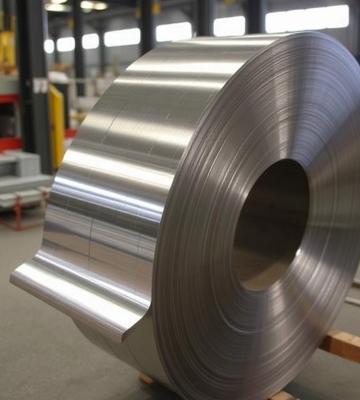
Nickel strips are thin, flat-rolled products manufactured from commercially pure nickel or nickel alloys. These strips are primarily used as conductive connectors, especially in battery systems, electronics, and industrial equipment.
Common grades used include:
- Nickel 200 (UNS N02200) – commercially pure nickel (minimum 99.0% Ni)
- Nickel 201 (UNS N02201) – low carbon version for improved performance at elevated temperatures
These materials are typically produced in accordance with ASTM B162, which defines composition, mechanical properties, and tolerances.
Chemical Composition (Nickel 200 – Typical)
- Nickel (Ni): ≥ 99.0%
- Carbon (C): ≤ 0.15%
- Iron (Fe): ≤ 0.40%
- Manganese (Mn): ≤ 0.35%
- Silicon (Si): ≤ 0.35%
- Sulfur (S): ≤ 0.01%
- Copper (Cu): ≤ 0.25%
Nickel 201 has a lower carbon limit (≤ 0.02%), which helps prevent embrittlement in high-temperature service.
Key Physical and Mechanical Properties
Nickel strips are selected for applications where consistent and predictable performance is required. Their key properties include:
- Electrical Conductivity
Pure nickel provides stable conductivity suitable for electrical connections and battery systems. - Low Electrical Resistivity
Approximately 0.096 µΩ·m at 20°C, supporting efficient current flow. - High Melting Point
Around 1455°C, allowing stability during welding and high-temperature exposure. - Thermal Conductivity
Around 70 W/m·K, helping dissipate heat in electrical systems. - Excellent Ductility
Can be formed, bent, and welded without cracking. - Corrosion Resistance
Performs well in alkaline environments and resists oxidation under normal conditions.
These values are consistent with material data referenced in ASTM specifications and standard engineering sources.
Forms and Specifications
Nickel strips are supplied in a range of dimensions to meet different industrial requirements:
- Thickness: Typically 0.05 mm to 5.0 mm
- Width: Custom slit sizes available
- Form: Coil, strip, or cut-to-length pieces
- Condition: Annealed, half hard, or full hard
- Surface Finish: Bright or matte finish for consistent welding performance
Applications of Nickel Strips
Battery Manufacturing
Nickel strips are widely used to connect cells in lithium-ion batteries, including cylindrical formats such as 18650 and 21700. Their conductivity and weldability make them suitable for reliable interconnections.
Electronics and Electrical Components
Used in terminals, connectors, and circuit components where stable conductivity is essential.
Chemical Processing
Nickel’s resistance to caustic alkalis makes it suitable for equipment used in chemical environments.
Aerospace and Industrial Systems
Applied in components requiring both mechanical stability and resistance to heat and corrosion.
Pure Nickel vs Nickel-Plated Steel
| Property | Pure Nickel Strip | Nickel-Plated Steel |
|---|---|---|
| Nickel Content | ≥ 99% | Surface coating only |
| Conductivity | High | Moderate |
| Corrosion Resistance | Strong | Limited |
| Weld Quality | Consistent | Less reliable |
| Cost | Higher | Lower |
For critical applications, especially in battery systems, pure nickel strips are generally preferred due to their predictable performance.
Why Standards Matter
Using nickel strips that comply with ASTM B162 ensures:
- Consistent chemical composition
- Reliable mechanical properties
- Uniform thickness and tolerances
- Predictable performance in industrial applications
This is particularly important in sectors like battery manufacturing, where small variations can affect efficiency and safety.
Conclusion
Nickel strips remain a fundamental material in modern industry due to their combination of conductivity, corrosion resistance, and formability. Grades such as Nickel 200 and Nickel 201, defined under ASTM standards, provide the consistency required for demanding applications like battery assembly, electronics, and chemical processing.

 English
 Arabic
 French
 Spanish
 Portuguese
 Deutsch
 Dutch
Dutch
 Italiano
 Russian
 Romaian
 Portuguese (Brazil)
 Greek
Greek