


How Automated Lead Follow-Up Reduces Response Time and Boosts Revenue
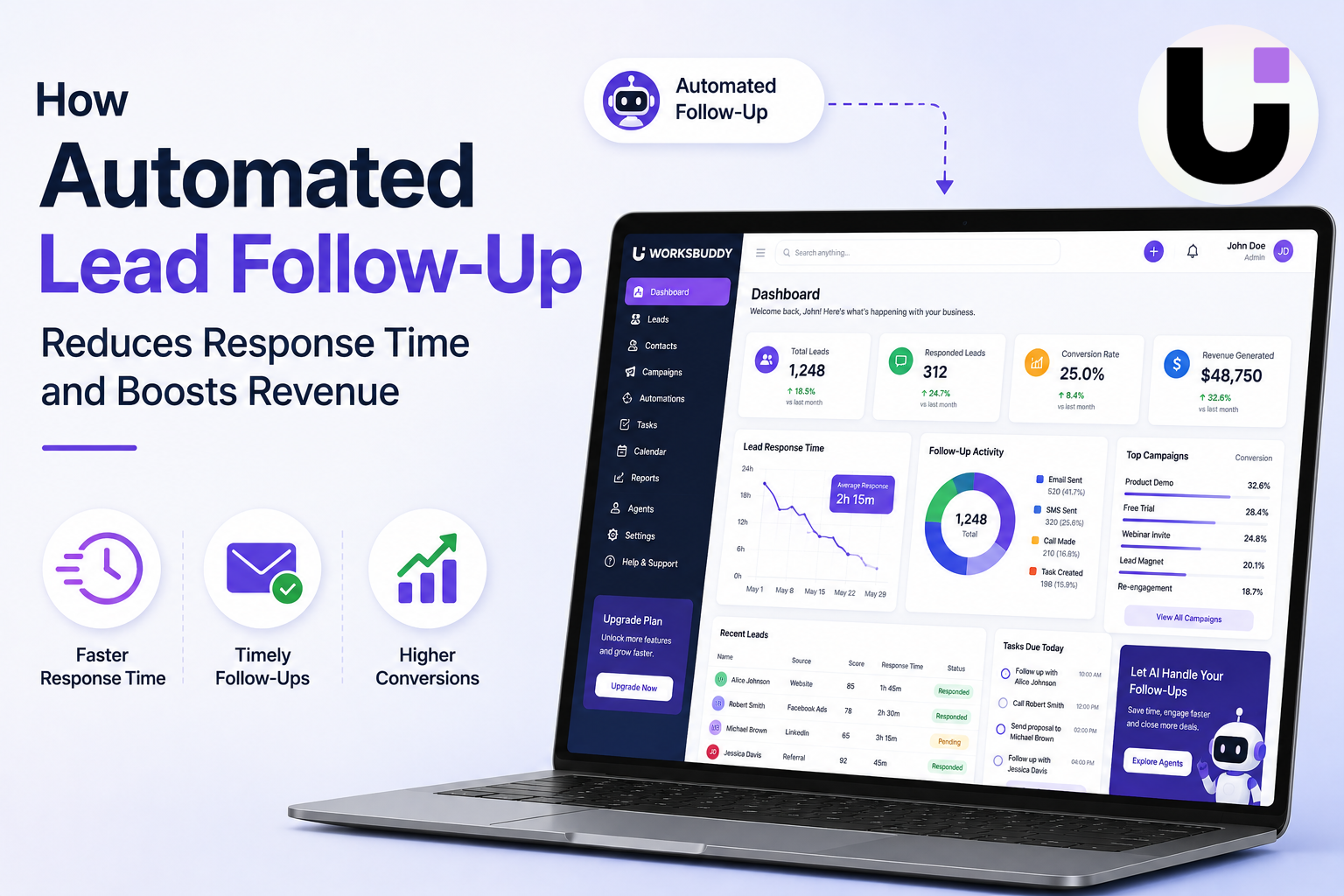
Every sales team has experienced it — a promising lead comes in, gets buried under existing work, and by the time someone follows up, the prospect has already signed with a competitor. Speed is no longer just an advantage in modern sales; it is the deciding factor. Research consistently shows that leads contacted within the first five minutes are exponentially more likely to convert than those reached an hour later.
Automated lead follow-up, combined with intelligent lead scoring software, removes the human delay from the equation. Instead of relying on memory, spreadsheets, or gut instinct, sales teams get a system that identifies which leads matter most and reaches out at exactly the right moment. The result is faster response times, fewer dropped opportunities, and a measurable lift in revenue.
Why Response Time Is a Revenue Problem
Most businesses underestimate how much slow follow-up costs them. When a prospect fills out a form, requests a demo, or downloads a resource, they are at peak interest. That interest does not hold indefinitely. Within an hour, attention shifts. Within a day, competing vendors have already started nurturing them.
The challenge is not effort — most sales teams are genuinely trying. The challenge is capacity. Reps juggle active deals, meetings, and admin tasks simultaneously, and new leads fall through the cracks not out of neglect but out of volume. This is precisely where automation changes the dynamic.
What Automated Lead Follow-Up Actually Does
Automated lead follow-up refers to a system that triggers personalized outreach — emails, SMS messages, or task assignments — based on a lead's behavior or entry point, without requiring a rep to manually initiate contact.
When someone submits a contact form, the system immediately sends a tailored acknowledgment, queues a follow-up sequence, and notifies the right salesperson. If the lead goes cold after the first touch, the system continues nurturing with scheduled messages rather than letting silence become permanent. Every step is tracked, logged, and reportable.
This does more than save time. It creates consistency. Every lead gets the same quality of initial engagement regardless of when they come in, whether it is Monday morning or Friday evening.
How Lead Scoring Software Sharpens the Focus
Automation without prioritization can still overwhelm a sales team. If every lead triggers the same follow-up urgency, reps still end up chasing low-intent contacts while high-value prospects wait.
Lead scoring software solves this by assigning a numerical value to each lead based on criteria such as company size, industry, page visits, email engagement, form fields completed, and how closely they match the ideal customer profile. A lead from a mid-market SaaS company who has visited the pricing page three times scores differently than someone who downloaded a top-of-funnel guide and never returned.
With scoring in place, automation becomes targeted. High-scoring leads get immediate, personalized outreach and direct rep involvement. Lower-scoring leads enter a longer nurture track until their behavior signals stronger intent. Sales teams stop treating all leads equally and start investing energy where the return is highest.
Practical Example: B2B SaaS Sales Workflow
Consider a B2B SaaS company receiving 200 inbound leads per month. Without scoring or automation, reps manually review each one, send individual emails, and follow up based on personal judgment. Response times average 6–12 hours, and roughly 40% of leads never receive a second touch.
With lead scoring software and an automated follow-up system integrated into their CRM, the same team now responds to top-tier leads within minutes. Mid-tier leads enter a structured 5-step email sequence. Low-intent leads receive educational content automatically. Reps spend their day talking to people who are ready to buy rather than chasing cold contacts. Conversion rates improve not because the team worked harder, but because the system worked smarter.
Platforms like WorksBuddy, for example, illustrate how workflow automation can connect lead capture, scoring logic, and follow-up sequences within a single environment — reducing the friction that typically slows sales operations down.
The Direct Link Between Automation and Revenue Growth
The revenue impact of automated lead follow-up operates on two levels. First, it recovers revenue that would otherwise be lost to slow response or missed follow-up. Second, it shortens the sales cycle by keeping prospects engaged between touchpoints rather than letting momentum die.
When leads are nurtured consistently, they arrive at sales conversations better informed and more confident. Reps spend less time educating and more time closing. Average deal velocity increases, and the pipeline becomes more predictable because nurture sequences produce measurable engagement signals that inform forecasting.
FAQ Section
Q1. What is the ideal response time for following up with a new lead?
Studies suggest contacting a lead within five minutes of their inquiry dramatically increases the likelihood of conversion. Automated follow-up systems make this achievable at scale without manual intervention.
Q2. How does lead scoring software integrate with existing CRMs?
Most modern lead scoring tools integrate natively with popular CRMs like Salesforce, HubSpot, and Zoho via API or built-in connectors. Scores sync automatically and can trigger CRM workflows, task assignments, and pipeline stage changes.
Q3. Can small businesses benefit from automated lead follow-up, or is it only for enterprise teams?
Small businesses often see the biggest proportional gains. With limited sales headcount, automation ensures no lead is overlooked, giving smaller teams enterprise-level consistency without the overhead.
Q4. How often should lead scoring criteria be reviewed and updated?
Scoring models should be audited quarterly at minimum. As your ideal customer profile evolves, campaigns change, and new data accumulates, scoring criteria need recalibration to stay accurate and actionable.
Q5. What metrics should I track to measure the effectiveness of automated follow-up?
Key metrics include first response time, lead-to-opportunity conversion rate, email open and reply rates within sequences, and overall sales cycle length. Comparing these before and after implementation gives a clear picture of impact.
Common Mistakes to Avoid
Even with the right tools, implementation errors undermine results. The most frequent mistakes include:
Setting up generic follow-up sequences that feel impersonal and trigger unsubscribes rather than conversations. Every automated message should feel like it was written for that specific lead segment, not broadcast to a list.
Ignoring lead score decay. A lead that scored highly three months ago may no longer be in-market. Scoring models need regular calibration to reflect current behavior rather than historical data.
Over-automating without human checkpoints. Automation handles volume efficiently, but it should escalate high-value leads to a real person at the right moment. Full automation without human judgment loses deals that needed a personal touch to close.
Speed and prioritization are the two variables that separate high-performing sales teams from average ones. Lead scoring software tells you who deserves your attention most, and automated lead follow-up ensures that attention arrives before a competitor's does. Together, they eliminate the gaps where revenue quietly disappears — slow responses, missed touches, and wasted effort on low-intent contacts.
The businesses consistently winning in competitive markets are not necessarily the ones with the largest sales teams. They are the ones whose systems work as hard as their people do.
Key Takeaways:
Response time directly affects conversion rates — automation closes the gap. Lead scoring ensures effort goes where return is highest. Consistent nurture sequences keep prospects engaged throughout longer sales cycles. Automation supports — not replaces — skilled salespeople by handling volume and escalating the right opportunities.

 Arabic
 French
 Spanish
 Portuguese
 Deutsch
 Turkish
 Dutch
Dutch
 Italiano
 Russian
 Romaian
 Portuguese (Brazil)
 Greek
Greek