


The Complete Guide to Choosing a Makeup Case with Makeup Storage That Works for Your Life
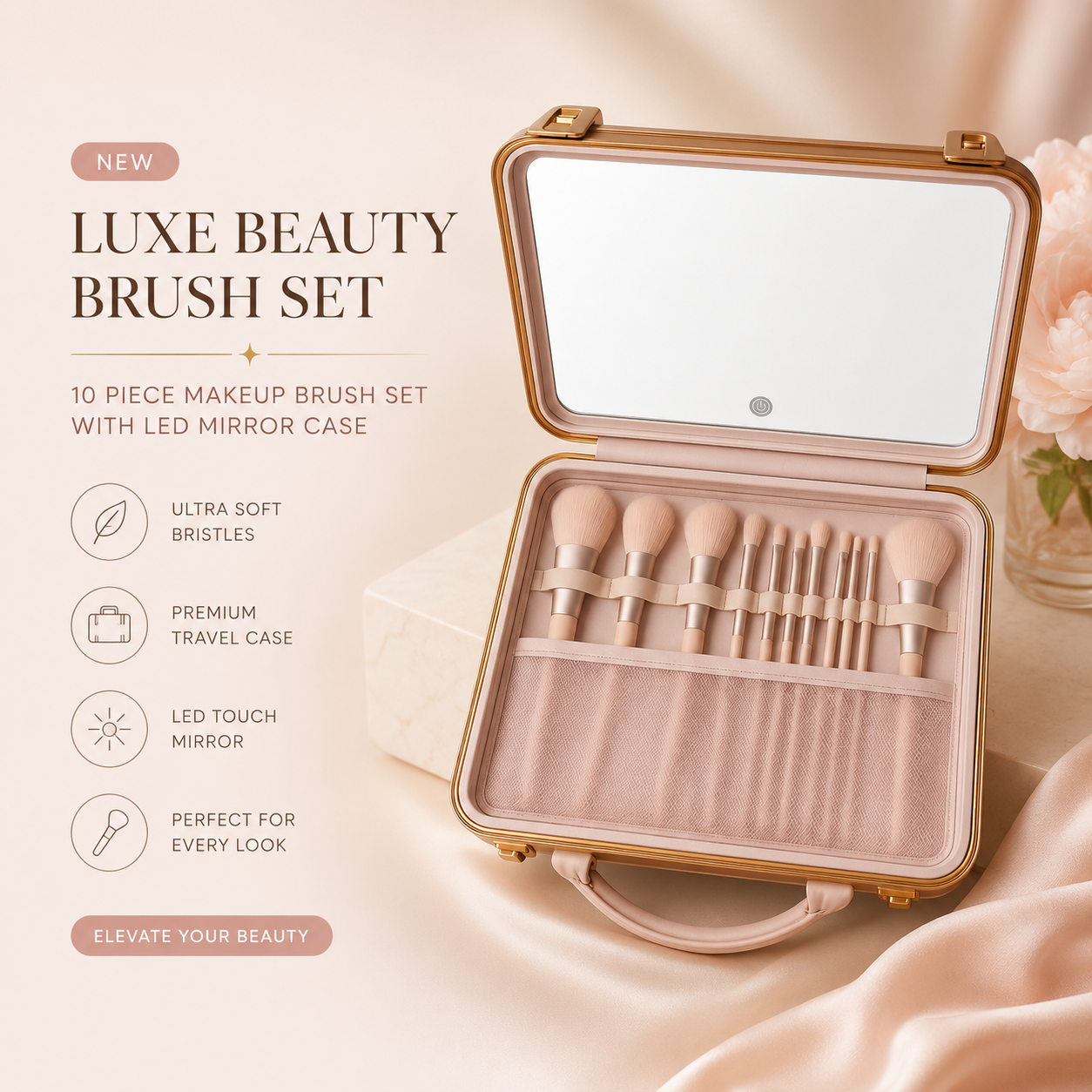
Whether you own a modest collection of daily essentials or an extensive range of palettes, foundations, and professional tools, the way you store your cosmetics has a direct and measurable impact on how long your products last, how efficiently you get ready each day, and how much you actually enjoy using what you own. Yet despite this, storage is one of the most overlooked aspects of building a cosmetics collection. Most people spend considerable time and money selecting the right products but give almost no thought to how those products will be housed, protected, and organised once they arrive home.
This guide takes a thorough look at every dimension of cosmetic storage — from the physical properties of different materials to the logic behind good compartment design, from hygiene to longevity — so that your next storage decision is genuinely informed rather than based purely on appearance or price alone.
Why the Right Storage Is a Product Investment, Not Just an Organisational One
The first thing worth understanding is that cosmetic storage isn't merely about keeping things tidy. It is, at a fundamental level, about protecting a financial investment. High-quality foundations, palettes, and brushes represent a significant cumulative spend for most people, and inadequate storage accelerates the deterioration of every item within a collection.
Pressed powder products — eyeshadows, blushers, highlighters, setting powders — are particularly vulnerable to physical impact. The binders that hold pigments in their compact form are designed for use, not for being knocked around inside a bag or drawer. When these products are stored without adequate separation and cushioning, micro-fractures develop over time, eventually causing the kind of crumbling and cracking that renders expensive palettes unusable far sooner than they should be.
Liquid products carry different but equally significant risks. Foundations, serums, primers, and cream formulations are sensitive to both temperature fluctuation and physical pressure on their seals and caps. Consistent storage in incorrect orientations, or in environments where temperature swings are regular, causes these formulations to separate, thicken, or degrade in ways that affect their application performance and skin compatibility.
Brushes are perhaps the most misunderstood category when it comes to storage. Both natural hair and synthetic fibre bristles will permanently deform if stored compressed or bent against other items. Once bristle shape is lost, the precision and blending capability of a brush is compromised in ways that cannot be reversed through cleaning or reshaping. Proper brush storage, in holders that maintain the correct form without applying pressure, is one of the most cost-effective ways of extending the life of quality tools indefinitely.
A properly designed makeup case with makeup storage built around these realities — with separated sections for palettes, upright holders for liquids, and dedicated brush compartments — actively prevents all of these forms of deterioration simultaneously.
Understanding Materials: What You're Actually Buying
The materials used in cosmetic storage vary considerably across price points, and understanding their specific properties helps you make a genuinely informed decision rather than simply guessing based on how something looks.
Hard shell cases, typically constructed from ABS plastic or similarly rigid polymers, offer the highest level of physical impact protection. This makes them the most sensible choice for frequent travellers whose luggage is regularly handled by others, stacked in overhead compartments, or transported in conditions beyond their control. The limitation of hard shell options is reduced flexibility — both literally, in that the case cannot accommodate items slightly larger than its fixed dimensions, and in terms of interior customisation, since rigid structures generally allow less adaptability in compartment arrangement.
Reinforced fabric cases represent a practical middle ground for most users. Materials like coated nylon, polyester canvas, and PVC-treated fabrics offer meaningful resistance to tearing and abrasion while remaining lighter than hard shell alternatives. These cases tend to offer more flexibility in accommodating irregularly sized items and are generally more comfortable to carry over extended periods.
Genuine leather cases offer considerable aesthetic appeal and, when properly maintained, exceptional longevity. The practical consideration is that leather requires specific care, particularly when exposed to the product spills and residue that are a normal part of cosmetic storage. For those willing to invest in proper maintenance, leather storage represents a genuinely long-term purchase.
Interior linings deserve as much attention as the exterior. A wipeable interior surface — smooth coated fabric, light PVC, or similar materials — is essential for practical hygiene. Absorbent textile interiors retain stains, harbour bacteria, and become increasingly difficult to maintain with regular cosmetic use. Given that the products stored within these cases are applied directly to skin, the hygienic properties of interior materials carry genuine importance beyond simple cleanliness.
Compartment Design: Where Most Storage Solutions Either Succeed or Fail
The interior layout of a storage case is where the difference between a well-designed product and a poorly designed one becomes most practically apparent. A make up case with makeup compartments genuinely thought through for real use will look meaningfully different from one that simply divides available space into uniform sections without much consideration for the variety of items being stored.
Palette sections require flat, stable surfaces with adequate separation between individual palettes. The dividers between sections should be firm enough to prevent palettes from sliding and impacting one another during transport, while also being gentle enough to avoid scratching protective surfaces or embossed packaging.
Brush holders function best when they provide individual slots or loops for each brush, keeping bristles separated and orientated correctly without allowing the heads to be compressed against any surface. The holder should be positioned to allow easy one-handed retrieval of individual brushes without disturbing the others, since fumbling with brush organisation during a time-pressured morning routine negates much of the efficiency benefit of good storage.
Liquid product holders should keep bottles and tubes genuinely upright. Many liquid formulations are vulnerable to cap and seal degradation when consistently stored horizontally, and a holder that allows products to tip during transport creates exactly the leak risk that good storage is supposed to prevent. Elasticated loops, moulded cradles, or firm padded vertical sections all achieve this more effectively than a flat base with nothing to secure items in position.
A dedicated accessories section, typically a zipped internal pocket, keeps smaller items — cotton buds, disposable applicators, hair grips, small tools — contained and separate from products without allowing them to cause damage through movement.
How to Determine the Right Size for Your Collection
Correct sizing is a decision that requires honesty about your actual collection rather than an idealised version of it. Both under-sizing and over-sizing create genuine problems, and neither is preferable to the other.
Under-sized storage results in overcrowding, which reintroduces exactly the impact and compression risks that dedicated storage is supposed to eliminate. Products squeezed into spaces too small for them are not meaningfully better protected than products stored without a case at all.
Over-sized storage allows products to shift and move within unused space, which during transport creates a different form of impact risk. It also consumes significantly more counter or shelf space than necessary, and for travel purposes adds weight and bulk without proportional benefit.
The practical approach is to take a genuine inventory of your current collection — counting palettes, measuring the tallest bottles, counting brushes — and then select storage that accommodates everything comfortably with perhaps twenty percent additional capacity for reasonable future additions. For extensive collections, multi-tier or layered solutions are not an optional luxury but a functional necessity.
Hygiene, Maintenance, and Longevity
A cosmetic case with makeup product residue accumulating within it over time creates conditions that can actively affect product quality and skin health. Loose powder particles settle onto every surface and into every crevice. Liquids occasionally leave residue even without obvious spills. Brush bristles transfer product into compartments. These are normal consequences of regular use, not exceptional accidents.
Maintaining your storage properly involves wiping down all interior surfaces with a gentle, non-abrasive cleaner on a regular basis — every two to three weeks for daily-use cases, or after every trip for travel-specific storage. Brush holders benefit from occasional deeper cleaning to remove accumulated bristle residue. Any compartment that has held a leaking product should be cleaned immediately and thoroughly before reuse.
Beyond cleaning, regular maintenance involves checking mechanical components — zips, hinges, clasps — for early signs of wear. Addressing a stiff zip with appropriate lubricant, or securing a slightly loose hinge, before these issues escalate prevents the kind of functional failure that requires complete replacement of an otherwise sound storage solution.
Making Your Final Decision
The right storage solution is one that addresses your specific collection, habits, and circumstances simultaneously. A frequent traveller with an extensive collection has genuinely different requirements from a minimalist who applies a five-minute routine at a fixed bathroom counter, and neither person benefits from advice calibrated for the other.
What remains consistent across all users is the underlying logic: storage should protect products physically, maintain them in appropriate conditions, allow efficient access during use, and be maintainable at a standard of hygiene appropriate for items applied to skin.
Brands that understand this design their products accordingly — with varied compartment sizes reflecting the diversity of cosmetic products, materials selected for both durability and cleanability, and construction quality that justifies the investment over years rather than months of use.
Final Thoughts
Investing seriously in cosmetic storage is, at its core, investing in everything else you've already spent money on within your collection. It extends product lifespans, eliminates the daily friction of disorganised routines, and creates a more considered, enjoyable relationship with the products you use. Once you've experienced the practical difference that genuinely well-designed storage makes, it becomes very difficult to return to whatever improvised arrangement existed before.

 English
 Arabic
 French
 Spanish
 Portuguese
 Turkish
 Dutch
Dutch
 Italiano
 Russian
 Romaian
 Portuguese (Brazil)
 Greek
Greek