


The Hidden Efficiency Engine: How Internal Gear Pumps and Modern Drives Are Transforming Hydraulic Power
Why Hydraulics Still Rule the World of Heavy Power
In an era obsessed with electronics, automation, and digital controls, it’s easy to overlook a technology that quietly powers some of the most complex and powerful machinery on earth: hydraulics. Whether you look at the excavator shaping a highway, the injection molding machine creating precision parts, or the press forming automotive components—behind all of them is a carefully engineered combination of hydraulic pumps and motors delivering controlled force.
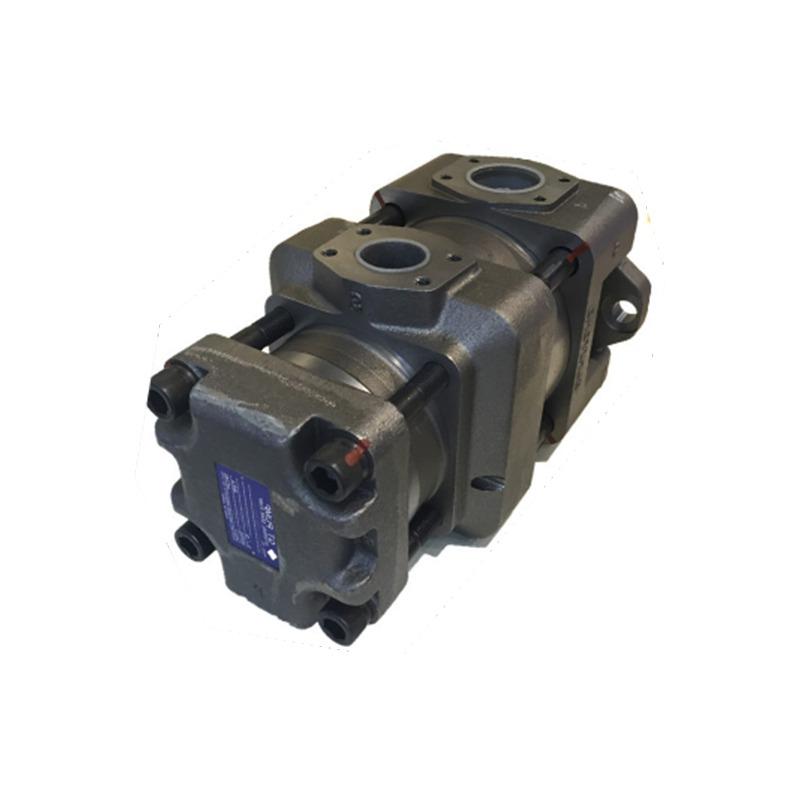
At the center of this world lies a class of components often underestimated but absolutely essential: internal gear pumps. Paired with advanced technologies like small servo motors and drives and compact, hydraulic power pack portable solutions, they are reshaping how industries think about efficiency, noise levels, power density, and long-term reliability.
This article isn’t about selling technology—it’s about understanding the quiet evolution happening in hydraulic systems and why it matters for every engineer, operator, and equipment owner.
Understanding the Backbone: Hydraulic Pumps and Motors
Before diving deeper into internal gear pumps or servo-driven systems, it’s important to understand the fundamental partnership between hydraulic pumps and motors.
A hydraulic pump does one basic job:
→ convert mechanical energy into hydraulic energy.
A hydraulic motor does the reverse:
→ convert hydraulic energy back into useful mechanical work.
This back-and-forth conversion is what makes hydraulics capable of producing massive force at low speeds, maintaining smooth motion control, and powering everything from construction machinery to industrial production lines.
But not all pumps or motors are built the same—and this is where internal gear pumps earn their reputation.
Why Internal Gear Pumps Stand Apart
For decades, engineers have relied on internal gear pumps because they offer a combination that’s rare:
predictability, efficiency, low noise, and simple maintenance—without compromising performance.
Unlike external gear pumps, which operate with two meshing external gears, internal gear pumps consist of an inner gear (the rotor) meshing with a larger outer gear (the idler). The offset between their centers creates sealed cavities that carry oil from inlet to outlet.
What makes internal gear pumps so effective?
-
Smooth, pulse-free flow
Their design naturally reduces pulsation, improving consistency—especially useful in systems where flow stability is critical. -
Low noise levels
Their internal geometry dampens vibration, making them perfect for applications requiring quieter operation. -
High viscosity tolerance
They can handle a wide range of fluids, from thin oils to thick, high-viscosity media. -
Excellent suction characteristics
This allows them to run in applications where the pump may operate above the fluid reservoir. -
Long service life
Their internal wear patterns tend to be gradual and predictable, reducing unexpected downtime.
This balance of characteristics is why internal gear pumps remain a preferred choice in precision hydraulic systems, chemical processing, lubrication systems, and portable power applications.
The Rise of Small Servo Motors and Drives in Hydraulics
A major transformation happening in recent years is the blending of traditional hydraulic power with precise electrical control. This is where small servo motors and drives enter the conversation.
Servo technology used to be reserved mainly for robotics, CNC machines, and automation systems requiring pinpoint accuracy. But now, hydraulic engineers are discovering the same benefits:
Why servo technology is pairing so well with hydraulics
-
Variable speed control allows the pump to run only when needed, drastically reducing energy consumption.
-
Reduced heat generation means smaller cooling systems and fewer energy losses.
-
Precise pressure and flow modulation gives hydraulic systems a level of responsiveness that once seemed impossible.
-
Smaller footprint makes systems more compact and portable.
-
Quiet operation is increasingly important in both industrial and mobile environments.
When a servo motor is paired with an internal gear pump, you get a combination that offers high efficiency, stable flow, and controllability that rivals fully electric drives—without sacrificing hydraulic force.
Hydraulic Motor Pump Systems: Power Where It’s Needed
A hydraulic motor pump is more than just a pump—it’s a complete power source that keeps industries moving. Its job is to supply the speed, torque, and pressure needed to drive hydraulic motors or cylinders in countless applications.
Today, these motor-pump combinations are expected to deliver more while consuming less. The integration of servo control, high-efficiency pump designs, and advanced filtration is helping companies achieve:
-
Higher energy savings
-
Reduced environmental impact
-
Longer component life
-
More predictable maintenance
-
Improved operator comfort and safety
As industries move toward cleaner, more efficient power, properly engineered hydraulic motor pump systems are proving essential.
Portable Power: The Value of a Hydraulic Power Pack Portable
Not all hydraulic systems are installed permanently. Many industries rely on hydraulic power pack portable units because they deliver force and control in locations where full-scale hydraulic infrastructure is unavailable.
Portable power packs are widely used in:
-
Construction and repair sites
-
Marine and offshore applications
-
Emergency maintenance
-
Railway systems
-
Mobile lifting equipment
-
Remote industrial operations
What makes portable hydraulic power packs invaluable?
● They’re compact but powerful, able to deliver high pressures despite small size.
● Portable systems can be paired with internal gear pumps for quieter, more reliable output.
● Servo-driven portable units offer new-generation efficiency with lower power draw.
● They allow workers to run hydraulic tools in remote or off-grid locations.
As industries shift toward mobility and flexibility, portable hydraulic power solutions are becoming essential rather than optional.
How These Technologies Work Together in Real Applications
To understand their value, imagine a scenario in a manufacturing plant that relies heavily on hydraulic presses and molding machines.
Case Example
A factory switches from a traditional fixed-displacement pump to a system using:
-
An internal gear pump
-
A small servo motor and drive
-
A compact hydraulic motor pump system
What changed?
-
Energy savings increased significantly
The motor no longer runs continuously; it adjusts speed based on demand. -
Noise levels dropped
Operators noticed the difference immediately. -
Cycle times improved
Servo-driven response reduced delays between operations. -
Maintenance costs decreased
Internal gear pumps wear slowly and predictably, extending service intervals. -
System temperature stabilized
Less heat from the motor and pump means smaller cooling needs.
When these technologies are combined with portable hydraulic power packs for maintenance or auxiliary tasks, the entire ecosystem becomes more efficient, flexible, and economical.
The Future of Hydraulic Pumps and Motors
Hydraulics isn’t disappearing. In fact, it is evolving in ways that make it more relevant than ever.
What’s emerging now is a generation of hydraulic systems that are:
-
Smarter
-
Quieter
-
More energy-efficient
-
Cleaner and more convenient
-
Integrated with servo and digital control systems
Internal gear pumps remain essential because they integrate so well with these advancements. Small servo motors and drives bring precision and efficiency to a technology historically known more for brute strength than finesse.
Together, they’re rewriting the possibilities of what hydraulic pumps and motors can achieve.
FAQs
1. What makes internal gear pumps different from other hydraulic pumps?
Internal gear pumps offer smoother, quieter operation and handle a wide range of viscosities. Their stable flow and excellent self-priming ability make them ideal for precision hydraulic systems.
2. Are small servo motors and drives really useful in hydraulic applications?
Yes. They allow variable speed control, reduce heat, save energy, and provide better responsiveness—making hydraulic systems more efficient and precise.
3. Where are hydraulic motor pump systems most commonly used?
They power industrial machinery, mobile equipment, presses, molding machines, and systems requiring high torque and controlled motion.
4. Why choose a hydraulic power pack portable instead of a fixed setup?
Portable power packs bring hydraulic force to remote locations, making them essential for field work, maintenance, and mobile applications.
5. Are hydraulic pumps and motors still relevant as electric systems become more popular?
Absolutely. Hydraulics deliver force density that electric systems cannot match. With improvements like servo integration and quiet pump designs, hydraulics remain unmatched in heavy-duty and precision tasks.

 Arabic
 French
 Spanish
 Portuguese
 Deutsch
 Turkish
 Dutch
Dutch
 Italiano
 Russian
 Romaian
 Portuguese (Brazil)
 Greek
Greek