


Ceramic Matrix Composites (CMC) Plant Setup in India: Cost, Machinery & Investment Insights
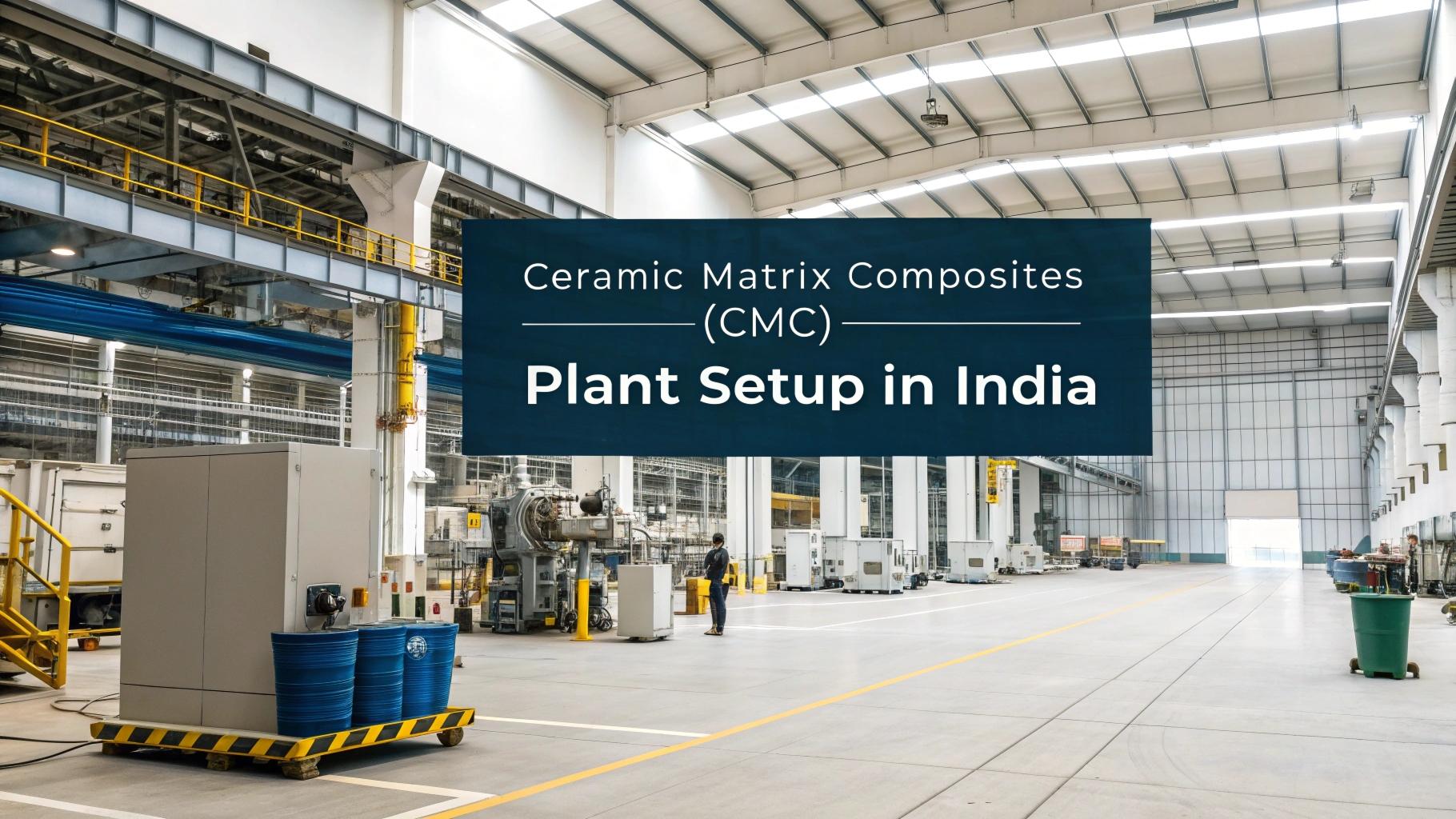
IMARC Group’s latest report on Ceramic Matrix Composites (CMC) Manufacturing Plant Setup in India provides a comprehensive roadmap for investors, entrepreneurs, and industry stakeholders aiming to establish or scale advanced CMC production capacity in the country. The study delivers in-depth insights into the manufacturing processes, critical machinery and equipment requirements, project economics, raw material sourcing, and operational considerations specifically tailored to India’s evolving high-performance materials ecosystem.
With India’s strategic thrust on aerospace, defence indigenization (Make in India, Atmanirbhar Bharat), clean energy, and high-temperature industrial applications, the report highlights state-of-the-art CMC processing routes (CVI, PIP, LPI, melt infiltration, and hybrid methods), precision automation, energy-efficient furnaces, and sustainable precursor management as key enablers of globally competitive and environmentally responsible operations. The study enables investors to align projects with national priorities, export regulations, defence offsets, special economic zones, and emerging R&D incentives, significantly accelerating feasibility studies, technology selection, and confident investment decisions.
Report Summary
The feasibility study evaluates the end-to-end setup of a Ceramic Matrix Composites (CMC) production plant—covering manufacturing processes (CVF, PIP, MI, slurry infiltration), capital investments, operating costs, manpower needs, utilities, and regulatory compliance.
The report finds that India’s growing demand for high-temperature composites—particularly from aerospace, defense, automotive, power generation, and industrial manufacturing—makes CMC manufacturing a strategically aligned investment with national industrial policies such as “Make in India,” “Atmanirbhar Bharat,” and defense indigenization programs.
Financial modeling suggests strong potential for scalable production, especially when leveraging local raw material processing, automation in fiber preforming, and continuous furnacing technologies. Risk assessments cover supply chain volatility, technology licensing requirements, quality control challenges, and environmental compliance needs.
Key Highlights
- Process Flow and Manufacturing Steps
– Fiber selection and preforming
– Matrix infiltration (PIP/MI/CVI)
– High-temperature sintering
– Machining, finishing, quality testing - Land and Site Development
– 2–5 acres depending on capacity
– Industrial zoning with pollution clearances - Plant Layout and Machinery
– Preform fabrication units
– Chemical vapor infiltration (CVI) furnaces
– Polymer infiltration & pyrolysis systems
– Machining centers, NDE systems - Raw Materials and Packaging
– Ceramic fibers, polymer precursors, silicon carbide powders
– High-strength crates and protective packaging - Utilities and Manpower
– Continuous power, industrial gases, controlled atmospheres
– Skilled engineers, materials scientists, operators - Project Economics
– CAPEX for furnaces, vacuum systems, clean rooms, testing labs
– OPEX for consumables, utilities, fiber procurement - Financial Analysis
– Cash flows, IRR, NPV, break-even - Market Overview
– Growing aerospace, defense, EV, and industrial applications
India Market Trends and Opportunity
India’s CMC market is driven by rapid innovation and a push toward advanced materials localization. Key growth drivers include:
- Aerospace & Defense: DRDO, ISRO, and domestic aerospace manufacturers are increasing adoption of heat-resistant CMCs for nozzles, thermal shields, and propulsion components.
- Electric Vehicles: CMCs are used in lightweight braking systems, high-temperature insulation, and energy-efficient drivetrain parts.
- Industrial Furnaces & Power: Energy-efficient components reduce heat loss and improve sustainability.
- Technology Adoption: India is rapidly adopting automation, vacuum furnacing, robotic preforming, and digital process control.
- Government Incentives: PLI schemes, R&D incentives, and import substitution efforts create a favorable investment ecosystem.
These factors make India an ideal destination for cost-competitive, scalable, and technology-driven CMC manufacturing.
Key Considerations for Setting Up a Plant in India
- Site and Utilities
– Reliable electricity, natural gas, and industrial gas supply
– Proximity to ports or aerospace/automotive hubs - Plant Design and Safety
– High-temperature furnace safety systems
– Environmental management for chemical precursors - Technology Selection
– Choice between CVI, PIP, MI based on cost and product requirements
– Licensing agreements with global technology providers - Supply Chain
– Secure sourcing of ceramic fibers and precursors
– Logistics planning for high-value, fragile materials - Operational Compliance
– State Pollution Control Board approvals
– BIS and defense-grade material testing standards
Request for the Sample Report: https://www.imarcgroup.com/ceramic-matrix-composites-manufacturing-plant-project-report/requestsample
Project Economics Overview
- CAPEX Elements
– CVI furnaces, PIP reactors, vacuum systems
– Land development, buildings, testing labs
– Automation systems and material-handling equipment - OPEX Components
– Ceramic fibers, polymer precursors, energy, gases
– Skilled labor, maintenance, quality assurance - Revenue Streams
– Aerospace and defense components
– EV system parts
– Industrial thermal components
– Export opportunities - Sensitivity Factors
– Raw material price fluctuations
– Energy costs
– Machine efficiency and yield
– Technology licensing terms
Analyst Insight
India is becoming a global center for advanced material manufacturing, and CMCs represent a high-value segment with exceptional long-term potential. Early investors can benefit from:
- First-mover advantages in a niche but fast-growing market
- Strong demand from aerospace, defense, EV, and industrial users
- High profitability from specialized, value-added products
- Reduced dependency on expensive imports
Strategically, integrating automation, local raw material sourcing, and continuous furnacing technologies can significantly improve margins and competitiveness.
What’s Included in the Detailed Project Report (DPR)
- Process design package (BFD/PFD)
• Mass and energy balance with preliminary equipment sizing
• CAPEX and OPEX itemized models
• Ten-year financial projections including cash flow, P&L, IRR, NPV
• Market and regulatory assessment tailored to the country
• Implementation roadmap covering EPC strategy, procurement, and commissioning
About IMARC Group
IMARC Group is a leading global market research and consulting firm offering market intelligence, feasibility studies, techno-economic assessments, and strategic advisory for industrial and manufacturing projects. Their expertise supports investors, developers, and policymakers in making well-informed decisions based on robust data, advanced analytics, and industry best practices.
Contact Us
IMARC Group
134 N 4th St, Brooklyn, NY 11249, USA
Email: sales@imarcgroup.com
Tel: (+1) 201-971-6302 | (D) +91 120 433 0800
Website: www.imarcgroup.com

 English
 Arabic
 French
 Spanish
 Portuguese
 Deutsch
 Turkish
 Dutch
Dutch
 Italiano
 Romaian
 Portuguese (Brazil)
 Greek
Greek