


3D Printing Techniques for Precision in Luxury Island Models
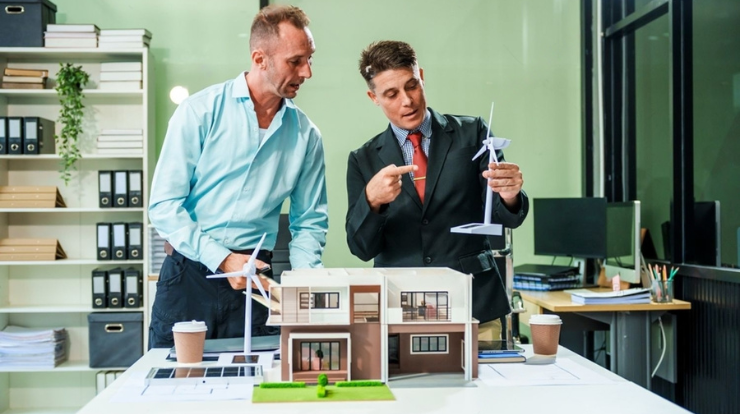
Luxury island developments require presentation models that reflect accuracy, elegance, and creativity. Every shoreline curve, villa façade, and marina layout must be portrayed with exact precision. To achieve this level of detail, designers rely on advanced 3D printing methods that transform digital designs into tangible models with lifelike textures and structures.
The precision offered by modern 3D printing helps these architectural scale models become powerful visualization tools that communicate both design intent and aesthetic sophistication.
Importance of Precision in Luxury Island Models
In luxury island projects, precision defines realism. Small errors in structure, proportion, or alignment can distort the visual impression of exclusivity. Each element, from beachfront villas to artificial lagoons, must align with the master plan.
Accurate modeling helps investors, developers, and architects visualize the layout and spatial relationships between private and communal spaces. This precision also ensures the model functions as a reliable reference for presentation and project approval.
Stereolithography (SLA) for High Surface Quality
Stereolithography is one of the most widely used 3D printing techniques in architectural modeling. It works by curing liquid resin layer by layer using a UV laser, creating extremely smooth surfaces.
Designers prefer SLA printing when working on intricate details like villa windows, railing patterns, or organic landscape shapes. The fine layer resolution of this method, often between 25 to 100 microns, allows production of delicate parts that look refined even at close view. The material’s surface requires minimal post-processing, making it ideal for sections of models that demand a polished, professional appearance.
Selective Laser Sintering (SLS) for Complex Geometry
Selective Laser Sintering is another advanced method used for creating complex structures that require strength and stability. It uses a laser to fuse powdered nylon or other polymers layer by layer. Unlike SLA, SLS does not require support structures, which means designers can print intricate geometries, interlocking forms, and overhangs easily.
This method is especially useful for printing topographical bases of islands, curved terrain sections, and hidden structural elements. The durability of SLS-printed components ensures that large-scale models maintain their shape and form during transportation or display.
Fused Deposition Modeling (FDM) for Structural Components
Fused Deposition Modeling is commonly used for larger parts of luxury island models that do not need extreme detailing but require strength and cost efficiency. The process involves extruding melted thermoplastic through a nozzle, building the structure layer by layer. FDM works well for printing building bases, landscape forms, and foundation layers.
It is ideal for preliminary model construction before finer details are added. The versatility of available materials, such as PLA and ABS, allows designers to experiment with different textures and finishes. Although surface smoothing is needed afterward, FDM remains an affordable option for structural elements of architectural scale models Dubai.
Digital Light Processing (DLP) for Fine Features
Digital Light Processing is similar to SLA but uses a digital projector to cure the resin. It provides high-speed printing with exceptional detail resolution. DLP is ideal for producing miniature furniture, façade decorations, and ornamented design elements in luxury villas.
The method achieves ultra-thin layers and sharp edges, which help in replicating intricate architectural patterns commonly seen in high-end island projects. Its fast production time also benefits large-scale modeling studios that need quick yet precise results for multiple components.
MultiJet and PolyJet Printing for Multi-Material Designs
PolyJet and MultiJet 3D printing methods are among the most advanced for creating multi-material and multi-color elements in a single print. These techniques jet layers of photopolymer droplets that are instantly cured with UV light.
The key advantage lies in their ability to produce parts with varied textures, such as glass-like transparency, matte stone finishes, or smooth metal effects. For luxury island models, these methods allow the accurate depiction of water features, glass façades, and reflective surfaces. By combining different material types within one object, designers achieve a realistic representation that enhances the overall model quality.
Binder Jetting for Natural Terrain and Textures
Binder Jetting offers a unique way to reproduce sand-like or stone-like surfaces that match natural island environments. The printer deposits a liquid binding agent onto a powder bed layer by layer, creating solid objects.
Once printed, the model can be treated with sealants or colors to achieve the desired finish. This technique is perfect for creating beaches, rocky cliffs, and landscape textures that visually resemble natural materials. Binder Jetting also allows color printing, which makes it suitable for terrain sections where tonal variations enhance realism.
Combining Multiple 3D Printing Methods
Most luxury island projects require a combination of printing technologies to achieve the desired outcome. For example, SLS can be used for strong base structures, while SLA or DLP may handle intricate architectural details.
PolyJet printing might add transparent water effects or reflective finishes. This hybrid approach ensures each component is produced using the most appropriate technology, balancing precision, durability, and visual appeal. Combining different methods also helps reduce production time while maintaining consistency in scale and proportion.
Post-Processing for Enhanced Precision
After printing, components undergo post-processing to refine surfaces and assemble parts. Sanding, priming, and painting remove visible print lines and enhance realism. Transparent coatings are applied to simulate glass and water reflections.
Fine brushes and airbrushing techniques add color gradients that mimic natural lighting and material tones. For high-end models, LED lighting is integrated to highlight features such as villas, walkways, and water zones. The post-processing stage transforms raw 3D prints into visually engaging miniatures that capture the essence of luxury island life.
Digital Workflow and Accuracy Control
The digital workflow before printing ensures precision throughout the model creation process. Designers start with CAD or BIM files and use 3D modeling software to optimize geometry for printing. Each component is digitally sliced with precise measurements to maintain scale consistency.
This digital control reduces human error and improves fitting accuracy when assembling the printed parts. The use of 3D scanning and parametric design tools further enhances dimensional accuracy, ensuring that the printed components align perfectly with the architectural vision.
Conclusion
The precision achieved through advanced 3D printing methods has revolutionized how luxury island developments are presented. Techniques like SLA, SLS, DLP, and PolyJet printing allow designers to create realistic, durable, and visually compelling architectural scale models.
These methods not only enhance craftsmanship but also improve communication between architects, clients, and investors. As printing technology continues to evolve, the capability to produce more refined and lifelike island models will expand, setting new standards for realism and precision in Dubai’s architectural presentations.

 Arabic
 French
 Spanish
 Portuguese
 Deutsch
 Turkish
 Dutch
Dutch
 Italiano
 Russian
 Romaian
 Portuguese (Brazil)
 Greek
Greek