


Medical Billing vs Medical Coding: What’s the Difference and Which Career Is Right for You?
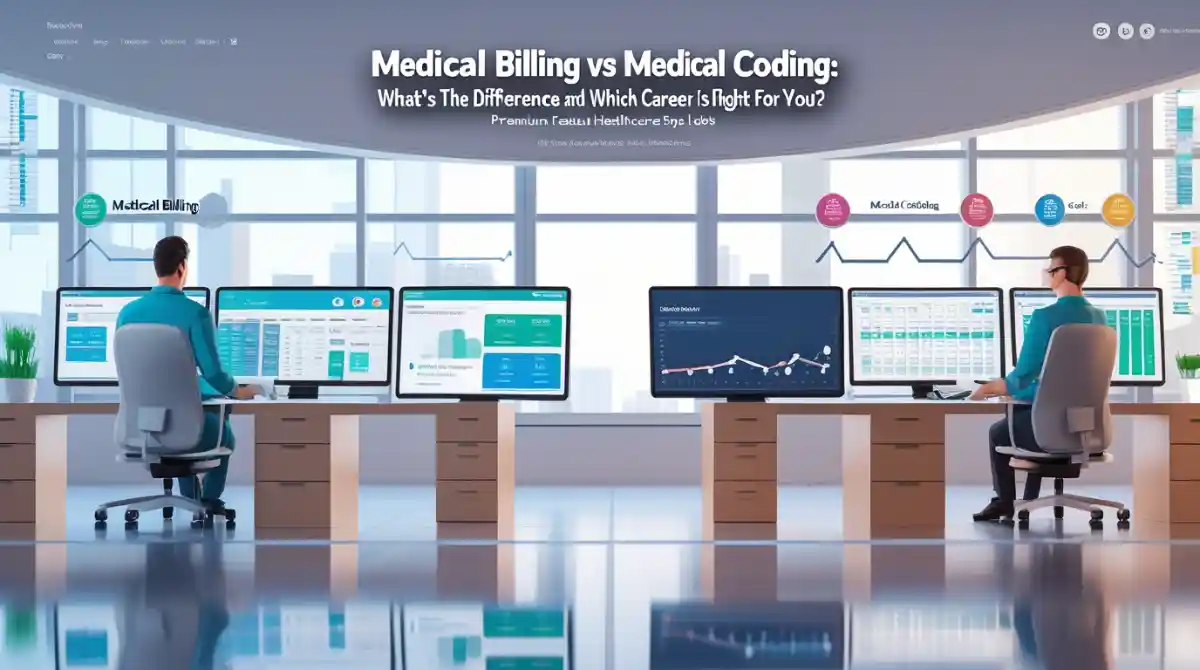
If you’ve ever looked into healthcare careers that don’t require a medical degree, you’ve probably come across the terms medical billing and medical coding. Most people assume they’re the same thing. They’re not — and confusing the two can send you down the wrong career path entirely.
In this guide, we’ll break down exactly what each role involves, how they differ, which pays more, which is easier to learn, and how you can get started — especially if you’re in Pakistan looking for a high-income remote career in 2025 and beyond.
What Is Medical Coding?
Medical coding is the process of translating a patient’s diagnosis, symptoms, treatments, and procedures into universal alphanumeric codes. These codes come from standardized systems like:
- ICD-10-CM (International Classification of Diseases) — for diagnoses
- CPT (Current Procedural Terminology) — for procedures and services
- HCPCS Level II — for equipment, supplies, and non-physician services
When a doctor writes “patient has Type 2 diabetes and received an insulin injection,” a medical coder converts that into specific codes — for example, E11.9 for the diagnosis and 99213 for the office visit. These codes are the foundation of the entire healthcare reimbursement system.
Medical coders work closely with Electronic Health Records (EHR/EMR systems), physician notes, and lab reports. Accuracy is everything — a wrong code can trigger a claim denial, a compliance audit, or even a fraud allegation.
Think of medical coders as the translators of healthcare. They don’t communicate with insurance companies directly. Their job ends once the coded claim is ready.
What Is Medical Billing?
Medical billing is what happens after the coding is done. A medical biller takes those codes and submits them to insurance companies (payers) as claims. Their job is to make sure the healthcare provider actually gets paid.
The medical billing process includes:
- Verifying patient insurance eligibility
- Submitting clean claims to insurance payers
- Following up on unpaid or denied claims
- Managing accounts receivable (AR) in healthcare
- Handling explanation of benefits (EOB) from insurers
- Posting payments and managing the revenue cycle management (RCM) process
- Coordinating prior authorizations when required
Medical billers are essentially the financial advocates for healthcare providers. They work directly with insurance companies, handle claim denial management, and ensure the practice maintains a high clean claim rate.
If a claim gets denied, it’s the biller’s job to appeal it, correct any errors, and resubmit. This requires strong knowledge of payer rules, denial codes, and healthcare compliance — including HIPAA regulations.
Medical Billing vs Medical Coding: The Core Differences
Here’s a clear side-by-side breakdown:
| Factor | Medical Coding | Medical Billing |
|---|---|---|
| Primary Role | Translates clinical notes into codes | Submits claims and collects payments |
| Works With | Physicians, EHR systems, code books | Insurance companies, patients, AR |
| Key Skills | ICD-10, CPT, HCPCS, coding accuracy | Claim submission, denial management, RCM |
| Certification | CPC (AAPC), CCS (AHIMA) | CPB (AAPC), CMRS |
| Interaction | Mostly internal | External (insurers, patients) |
| Difficulty | Slightly more technical | More process-oriented |
| Remote Work | Yes — highly remote-friendly | Yes — fully remote-capable |
The biggest difference comes down to this: coders translate, billers collect. Both roles are essential to the healthcare revenue cycle, but they require different skill sets and mindsets.
Which Pays More — Medical Billing or Medical Coding?
According to data from the U.S. Bureau of Labor Statistics and AAPC’s annual salary surveys, medical coders generally earn slightly more than medical billers due to the specialized technical knowledge required.
- Average medical coding salary (USA): $47,000–$65,000/year
- Average medical billing salary (USA): $38,000–$55,000/year
- In California and New York, experienced coders can earn $70,000+
- Remote medical coding jobs worldwide have opened up huge earning potential for professionals in Pakistan, India, and the Philippines
For Pakistani professionals working remotely with US-based practices, the dollar-to-rupee advantage makes this one of the highest-paying remote careers available today.
You can explore how this compares to other digital careers on the IDT medical billing career scope guide.
Which Is Harder — Medical Billing or Medical Coding?
This is one of the most common questions beginners ask.
Medical coding is generally considered harder to learn initially. It requires memorizing thousands of codes, understanding anatomy and medical terminology, and applying strict coding guidelines. One missed modifier or wrong code can cascade into denied claims and compliance issues.
Medical billing has a steeper learning curve on the process side — understanding payer rules, insurance verification, denial workflows, and patient financial services. It’s less about memorization and more about communication, follow-up, and problem-solving.
That said, many professionals learn both. A dual role in medical billing and coding is common in smaller practices and makes you significantly more valuable in the job market.
Can You Do Medical Billing and Coding at the Same Time?
Yes — and in many clinics and smaller practices, one person handles both. This is often called a billing and coding specialist role. It requires strong knowledge of both the technical coding side (ICD-10, CPT, HCPCS) and the financial side (claim submission, denial management, AR follow-up).
If you’re just starting out, it’s usually recommended to learn coding first, then layer billing skills on top. This is the approach followed in IDT’s Advanced Medical Billing Course, which covers both disciplines in a structured, practical curriculum.
Do You Need a Degree for Medical Billing and Coding?
No degree is required. Most employers and US-based medical practices hire certified professionals regardless of formal education background.
What actually matters is:
- Certification from AAPC or AHIMA — the two leading credentialing bodies
- Practical experience with real-world claim scenarios
- Familiarity with medical billing software and EHR platforms
- Understanding of HIPAA regulations and healthcare compliance
The CPC (Certified Professional Coder) credential from AAPC is the gold standard for coders. The CCS (Certified Coding Specialist) from AHIMA is another widely respected certification. For billers, the CPB (Certified Professional Biller) from AAPC is the most recognized.
You can learn more about AAPC and AHIMA certification paths at aapc.com — one of the most authoritative sources in the industry.
Medical Billing and Coding in Pakistan — A Massive Opportunity
Pakistan has become one of the fastest-growing hubs for remote medical billing and coding professionals serving US healthcare providers. Here’s why:
- Large English-speaking workforce
- Growing number of medical billing companies in Lahore, Islamabad, Karachi, Rawalpindi, and Faisalabad
- Dollar-based earnings with low cost of living
- High demand from small US medical practices for outsourced billing services
- Remote work is fully possible — no need to be physically in the USA
Whether you’re looking for medical billing jobs in Islamabad, remote medical coding jobs from Pakistan, or want to launch your own medical billing services company, the opportunity is very real right now.
IDT (Institute of Digital Trainings) has trained hundreds of Pakistani professionals who now work remotely with US clients. Check out their fast-track medical billing programs and medical billing course with internship in Pakistan to understand how structured training works in the local context.
Key Skills You Need for Each Role
For Medical Coders:
- Strong knowledge of ICD-10-CM, CPT, and HCPCS codes
- Medical terminology and anatomy basics
- Attention to detail and coding accuracy
- Understanding of outpatient vs inpatient coding rules
- Familiarity with modifiers, bundling rules, and upcoding/downcoding compliance
For Medical Billers:
- Insurance eligibility verification
- Claim submission via clearinghouses
- Denial code analysis and appeals
- Accounts receivable (AR) follow-up
- Revenue cycle management (RCM) workflows
- Practice management software (PMS) proficiency
- Knowledge of HIPAA compliance and patient financial services
Medical Billing vs Coding: Which Should You Choose?
Here’s a simple decision framework:
Choose Medical Coding if you:
- Enjoy analytical, detail-oriented work
- Are comfortable learning technical code sets
- Prefer working independently with documents
- Want the higher earning ceiling long-term
Choose Medical Billing if you:
- Prefer communication and process management
- Want to get job-ready slightly faster
- Are comfortable following up with insurance companies
- Enjoy problem-solving in a workflow-heavy environment
Choose Both (Dual Role) if you:
- Want maximum career flexibility
- Are targeting smaller practices or remote freelance work
- Want to start your own medical billing services business in Pakistan
For more context on how to choose between a certificate and diploma program, read medical billing certification vs diploma 2025 on IDT’s blog.
How to Learn Medical Billing and Coding in Pakistan
Free resources:
- AAPC’s free coding resources and sample exams at aapc.com
- CMS (Centers for Medicare and Medicaid Services) official documentation
- YouTube channels covering ICD-10 and CPT basics
Paid/structured programs:
- IDT’s Medical Billing Course in Pakistan — one of the most comprehensive programs available locally, covering coding, billing, software tools, and real US claim scenarios
- Affordable accredited medical billing courses reviewed on IDT’s blog
- Best medical billing course beginner’s guide for those just getting started
IDT also offers career mentorship — you can explore expert instructors like Mr. Mubashir Zafar and Mr. Ali Usman who have real-world US healthcare experience.
Future of Medical Billing and Coding
AI is entering healthcare administration fast. Tools powered by artificial intelligence are automating parts of the coding workflow — but this does not make human coders obsolete. AI in medical coding still requires human oversight for accuracy, auditing, and compliance.
In fact, coders and billers who understand AI-assisted medical coding tools are becoming more valuable, not less. The future belongs to professionals who combine technical skill with technology literacy.
The guide to becoming a certified medical biller on IDT’s blog covers how to future-proof your career in this evolving landscape.
Frequently Asked Questions (FAQs)
What is the difference between medical billing and medical coding? Medical coding converts clinical diagnoses and procedures into universal codes (ICD-10, CPT, HCPCS). Medical billing uses those codes to submit insurance claims and collect payments. Coding comes first; billing follows.
Which pays more — medical billing or medical coding? Medical coding generally pays slightly more due to its technical complexity. US-based coders earn $47,000–$65,000 on average, while billers earn $38,000–$55,000. Both offer strong earning potential for remote professionals in Pakistan.
Is medical coding harder than medical billing? Yes, medical coding has a steeper initial learning curve because it requires memorizing code sets and medical terminology. Medical billing is more process-driven and communication-focused.
Can you work from home as a medical biller or coder? Absolutely. Both roles are among the most remote-friendly jobs in healthcare. Many US practices outsource billing and coding to remote professionals in Pakistan, India, and the Philippines.
How long does it take to learn medical billing and coding? A structured course typically takes 3 to 6 months. IDT’s fast-track program covers both billing and coding with hands-on practice, preparing you for real-world remote work in under 6 months.
Do I need a degree for medical billing and coding? No degree is required. A certification from AAPC (CPC for coders, CPB for billers) or AHIMA (CCS) is what employers actually look for.
What certifications do medical coders need? The most recognized certifications are CPC (Certified Professional Coder) from AAPC and CCS (Certified Coding Specialist) from AHIMA.
Are medical billing and coding the same job? No. They are two separate but related roles. Some smaller practices hire one person to handle both, but in larger healthcare organizations, they are distinct positions.
Conclusion — Take the Next Step Today
Medical billing and medical coding are two of the most in-demand, remote-friendly, and high-earning non-clinical healthcare careers available in 2025. Whether you’re a student, a career changer, or someone looking to earn in dollars from Pakistan, this field offers real, tangible opportunity.
The key is getting the right training from people who actually know the US healthcare system — not just theory from a textbook.
IDT (Institute of Digital Trainings) offers Pakistan’s most practical and career-focused Medical Billing and Coding course, complete with real US claim practice, software training, and expert mentorship.
Book a seat in IDT’s Advanced Medical Billing Course and start building a career that pays in dollars — from anywhere in Pakistan.
You can also register directly here or contact the IDT team to ask any questions before enrolling.
The opportunity is real. The training is available. The only thing left is your decision.

 Arabic
 French
 Spanish
 Portuguese
 Deutsch
 Turkish
 Dutch
Dutch
 Italiano
 Russian
 Romaian
 Portuguese (Brazil)
 Greek
Greek