


Compact Power, Smarter Motion: Understanding Modern Hydraulic Motors and Gear Pumps
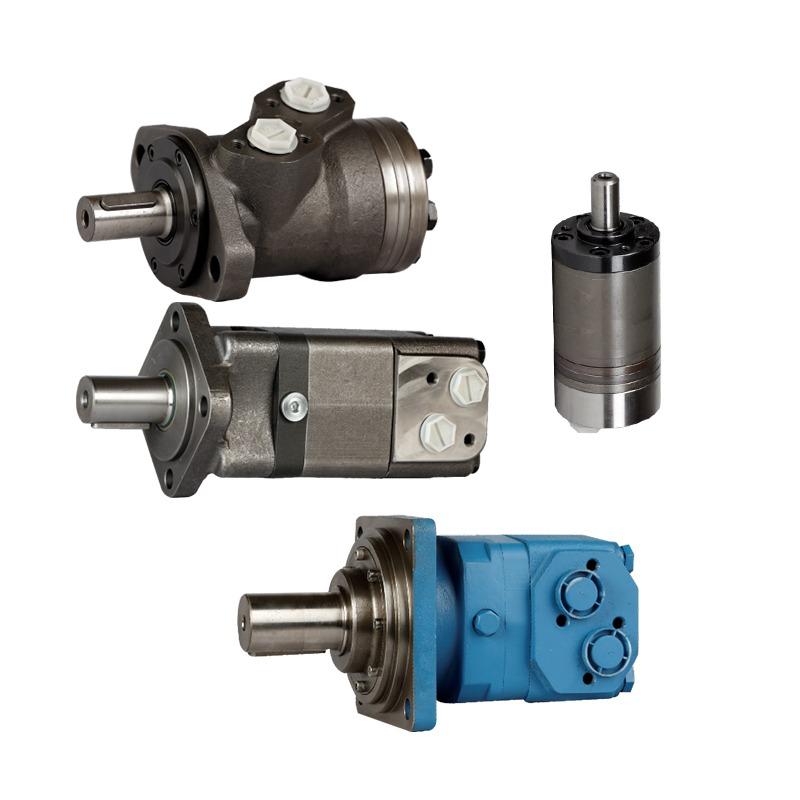
When people think about hydraulics, they often picture massive cylinders and heavy industrial machinery. But some of the most important work in modern systems is done by much smaller components working quietly in the background. Small hydraulic motors, internal gear pumps, and servo-driven systems now power everything from mobile equipment to compact industrial machines.
These components may be small in size, but they play a huge role in efficiency, control, and reliability. Whether you are designing a new system, upgrading an existing machine, or simply trying to understand how modern hydraulics have evolved, knowing how motors and pumps interact is essential.
This article explores how hydraulic motors for sale, internal and external gear pump designs, and small servo motors and drives are shaping today’s hydraulic systems, especially where space, precision, and energy efficiency matter.
Why Small Hydraulic Motors Matter More Than Ever
In the past, hydraulic motors were chosen mainly for brute force. Size often equaled power. Today, the focus has shifted. Engineers and equipment designers want motors that deliver reliable torque without adding unnecessary weight or consuming excessive energy.
That’s where small hydraulic motors stand out. These motors are designed to provide consistent performance in compact spaces. You’ll find them in applications such as conveyor drives, compact construction equipment, agricultural attachments, and mobile machinery.
Their value lies in flexibility. Small motors allow designers to place power exactly where it’s needed, reducing mechanical complexity and improving overall system efficiency. They also tend to respond faster, which is critical in applications requiring smooth acceleration and precise control.
Choosing Hydraulic Motors for Sale: What Really Matters
Browsing hydraulic motors for sale can feel overwhelming. There are many designs, specifications, and price points. But choosing the right motor is less about selecting the biggest or most expensive option and more about matching the motor to the application.
Key considerations often include operating pressure, torque requirements, speed range, and duty cycle. For mobile or compact systems, efficiency and thermal performance matter just as much as raw output.
Another often overlooked factor is how the motor interacts with the pump and control system. A well-matched motor-pump combination reduces energy loss, improves response time, and extends component life.
Instead of focusing only on motor ratings, experienced designers look at the system as a whole. This holistic approach leads to better performance and fewer surprises down the line.
Internal Gear Pumps: Smooth Flow in Compact Systems
Among pump technologies, internal gear pumps have earned a strong reputation for reliability and smooth operation. Their design allows for consistent flow with minimal pulsation, which is especially important when precision is required.
Unlike external gear designs, internal gear pumps operate with a gear inside another gear, creating sealed chambers that move fluid efficiently. This results in quieter operation and better handling of varying fluid viscosities.
In compact hydraulic systems, internal gear pumps are often preferred because they deliver stable performance even at low speeds. This makes them ideal for applications where flow must be carefully controlled rather than simply maximized.
Internal and External Gear Pump Designs: Understanding the Difference
Both internal and external gear pump designs have their place in hydraulic systems. External gear pumps are known for their simplicity, cost-effectiveness, and robustness. They are widely used in systems where flow demand is steady and noise is less critical.
Internal and external gear pump designs differ mainly in how they handle flow smoothness and efficiency. Internal gear pumps tend to produce less noise and vibration, which improves system stability and reduces wear on downstream components.
For systems that rely on precise motion control, especially when paired with sensitive actuators or servo drives, internal gear pumps often provide better results. External gear pumps still remain a solid choice for straightforward, high-volume applications.
The Rise of Small Servo Motors and Drives in Hydraulic Systems
Hydraulic systems are no longer purely mechanical. Electronics now play a critical role in improving efficiency and control. Small servo motors and drives are increasingly integrated into hydraulic systems to regulate pump speed, valve position, and system response.
Servo drives allow pumps and motors to respond dynamically to changing load conditions. Instead of running continuously at full speed, the system adjusts output in real time. This leads to lower energy consumption, reduced heat generation, and smoother motion.
In compact systems, servo-driven control is especially valuable. It allows designers to extract more performance from smaller components, reducing the need for oversized pumps or motors.
How Motors, Pumps, and Drives Work Together
A modern hydraulic system is a coordinated network, not a collection of isolated parts. Small hydraulic motors convert fluid power into motion. Internal gear pumps supply that fluid with stable flow. Servo motors and drives regulate how and when that power is delivered.
When these components are properly matched, the system becomes more responsive and efficient. Motion becomes smoother. Energy losses decrease. Maintenance intervals extend.
This integration is particularly important in mobile and compact machinery, where power availability is limited and operating conditions change constantly.
Real-World Applications of Compact Hydraulic Systems
Compact hydraulic systems are everywhere. You’ll find them in mobile lifting platforms, agricultural equipment, automated material handling systems, and specialized industrial machinery.
In these applications, small hydraulic motors drive wheels, conveyors, and rotary actuators. Internal gear pumps provide quiet, consistent flow. Servo-driven control ensures precise movement, even under variable loads.
The result is equipment that feels more refined and predictable to the operator. Tasks become easier to control, and system behavior becomes more intuitive.
Maintenance and Longevity Benefits
One of the hidden advantages of well-designed compact systems is reduced wear. Smooth flow from internal gear pumps places less stress on seals and bearings. Servo-driven control avoids pressure spikes that can damage components over time.
Small hydraulic motors, when operated within their optimal range, tend to last longer and require less frequent maintenance. This reliability is especially valuable in mobile equipment, where downtime can be costly.
Preventive maintenance also becomes easier when systems operate predictably. Abnormal behavior is easier to detect, allowing issues to be addressed before they turn into failures.
Looking Ahead: The Future of Compact Hydraulics
Hydraulic technology continues to evolve. The push for energy efficiency, reduced emissions, and smarter machines is driving innovation in motors, pumps, and control systems.
Small hydraulic motors will become even more capable. Internal gear pumps will continue to improve in efficiency and noise reduction. Servo motors and drives will become more integrated and intelligent.
Together, these components will help hydraulic systems remain competitive with electric and hybrid alternatives, offering unmatched power density combined with modern control capabilities.
Final Thoughts
Hydraulics are no longer defined by size alone. Today’s systems rely on intelligent design, compact components, and precise control. Small hydraulic motors, internal gear pumps, and servo-driven technology are at the center of this transformation.
By understanding how these elements work together, engineers and operators can build systems that are efficient, reliable, and ready for the demands of modern applications.
FAQs
What are small hydraulic motors commonly used for?
They are used in compact machinery, mobile equipment, and applications where space is limited but reliable torque is needed.
Why choose internal gear pumps over other pump types?
Internal gear pumps provide smoother flow, lower noise, and better performance at variable speeds, making them ideal for precision systems.
How do servo motors improve hydraulic systems?
Servo motors and drives allow real-time control of pump and motor speed, improving efficiency and motion accuracy.
Are external gear pumps still relevant today?
Yes. External gear pumps remain popular for simple, cost-effective applications with steady flow requirements.
What should I consider when selecting hydraulic motors for sale?
Focus on system compatibility, efficiency, duty cycle, and how the motor interacts with pumps and control components.

 Arabic
 French
 Spanish
 Portuguese
 Deutsch
 Turkish
 Dutch
Dutch
 Italiano
 Russian
 Romaian
 Portuguese (Brazil)
 Greek
Greek