


A Practical Guide to Treating Angina with Anti-Anginal Therapy
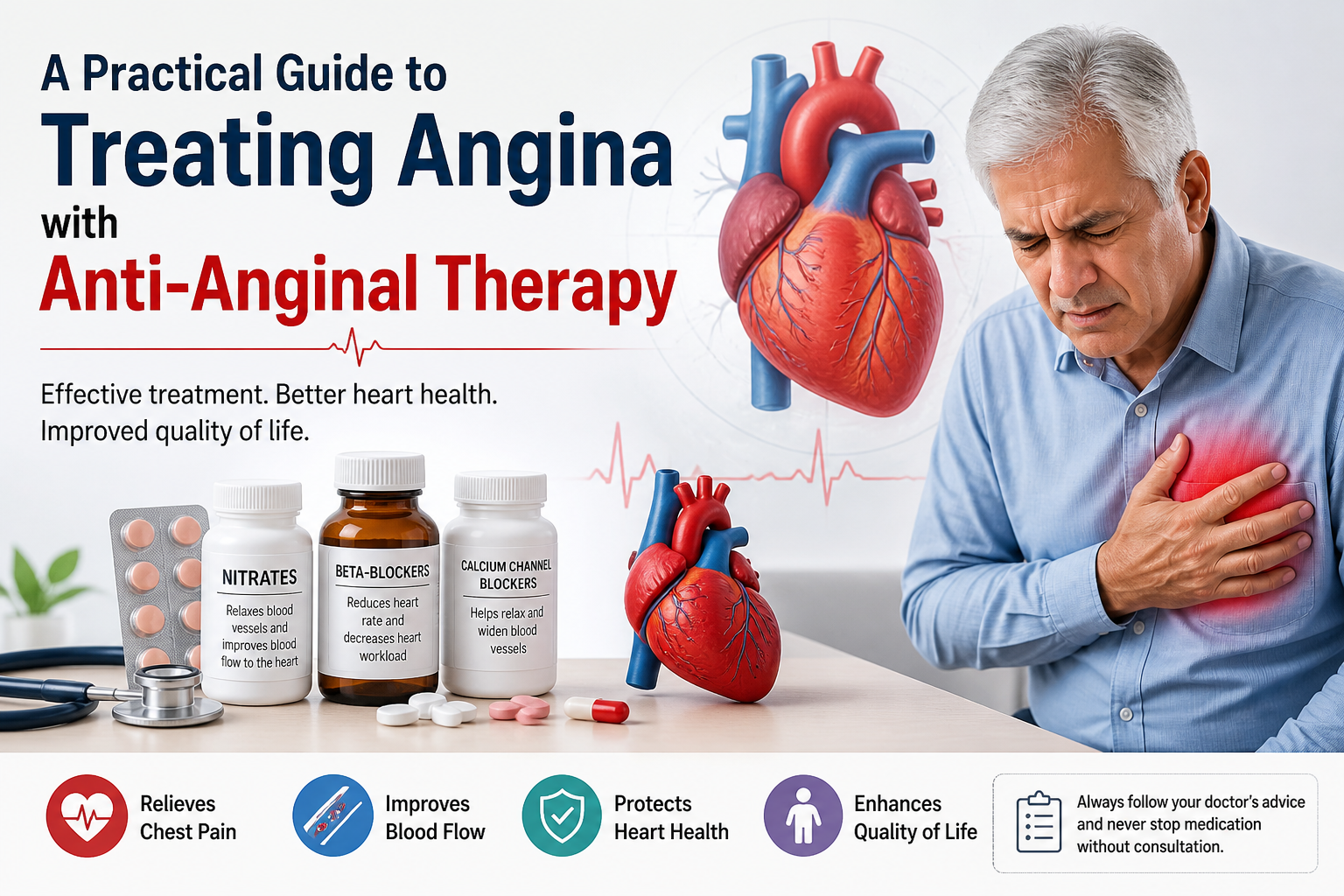
Angina is associated with reduced blood supply to the heart muscle and its oxygen needs. Commonly linked to coronary heart disease, angina symptoms can cause major issues in daily life and affect heart function, which can become life-threatening if not managed properly.
Fortunately, there is a simple and effective anti-anginal therapy system that helps minimize long-term risks.
What is Anti-Anginal Therapy?
This therapy includes prescribed medications used to manage angina symptoms and improve the balance between oxygen supply and demand in the heart.
Angina (chest pain) can be classified into different categories.
Objectives of Anti-Anginal Therapy:
- Provide instant relief of chest pain
- Help reduce the workload on the heart
Understanding the Mechanism
Understanding angina is critical for accurate treatment. In most cases, symptoms occur due to plaque buildup in the arteries.
Anti-anginal therapy works by:
- Allowing blood vessels to enlarge
- Improving blood flow and blood pressure regulation
- Decreasing myocardial oxygen consumption
First-Line Anti-Anginal Medications
1. Nitrates
Nitrates are one of the first drug classes used in treating angina. They relax and widen blood vessels to increase blood flow to the heart.
- Used for fast-acting relief during angina episodes
- Available as tablets, sprays, or patches
- Example: Nitroglycerin
- Patients are encouraged to keep this medication on hand
2. Beta-Blockers
Using beta-blockers helps slow the heart.
- Suitable for long-term prevention
- Recommended for patients with previous myocardial infarction
- Helps improve survival
- First-line therapy for chronic stable angina
3. Calcium Channel Blockers
These relax blood vessel muscles and reduce the heart’s workload by lowering heart rate.
- Effective in both stable and unstable angina
- Improve blood flow and reduce cardiac workload
- Useful when beta-blockers cannot be prescribed
Second-Line and Add-On Therapies
When first-line therapies are not sufficient, other medications may be added.
4. Ranolazine
Ranolazine works by affecting energy use in cardiac cells.
- Reduces angina without significantly affecting heart rate or blood pressure
- Often used in combination therapy
- Helps reduce frequency of angina episodes
5. Ivabradine
Ivabradine lowers heart rate without affecting blood pressure.
- Used in patients intolerant to beta-blockers
- Improves exercise capacity
6. Nicorandil
Nicorandil improves oxygen supply by dilating blood vessels.
- Often used in combination therapy
- Helps reduce angina episodes
Choosing the Right Therapy
There is no universal anti-anginal therapy. Treatment depends on multiple factors.
- Type of angina
- Severity of symptoms
- Patient condition and medical history
Doctors usually start with a single therapy and adjust based on response.
Combining Medications for Better Results
Combination therapy is often more effective.
Examples:
- Beta-blocker + nitrate
- Calcium channel blocker + nitrate
- Ranolazine with standard therapy
Combination therapy targets multiple pathways and improves outcomes.
Supporting Lifestyle Changes
Anti-anginal therapy is more effective when combined with healthy habits.
Dietary Adjustments
- Reduce salt, sugar, and unhealthy fats
Regular Physical Activity
- Supervised exercise improves cardiovascular function
Weight Management
- Maintaining a healthy weight reduces strain on the heart
Smoking Cessation
- Smoking worsens angina and contributes to atherosclerosis
Monitoring Treatment Effectiveness
Patients should be regularly evaluated.
Signs of effective treatment:
- Reduced chest pain episodes
- Improved ability to perform daily activities
- Less reliance on emergency medication
Additional tests may include stress tests or heart imaging.
Managing Side Effects
Most medications may cause side effects.
Examples:
- Headache (nitrates)
- Fatigue (beta-blockers)
- Dizziness and swelling (calcium channel blockers)
Side effects are usually manageable but should be reported.
When Medication Isn’t Enough
If symptoms are not controlled, further treatment may be needed.
Percutaneous Coronary Intervention (PCI)
- A procedure to open blocked arteries
Coronary Artery Bypass Surgery (CABG)
- Used in severe cases to restore blood flow
Special Considerations
Diabetes and Angina
- May present with atypical symptoms and higher risk
Elderly Patients
- Require careful monitoring for side effects
Women with Angina
- May experience different symptoms leading to delayed diagnosis
Emergency Guide
- Keep emergency medication readily available
- Follow prescribed medication schedules
- Avoid triggers such as stress and heavy meals
- Maintain regular doctor visits
- Adopt heart-healthy habits
Consistency and compliance are essential in managing angina.
Long-Term Outlook
Anti-anginal therapy helps manage symptoms and prevent complications like heart attacks.
With proper treatment, many patients can:
- Stay active
- Participate in exercise
- Reduce the risk of major cardiac events
Conclusion
Managing angina with anti-anginal therapy is effective when followed correctly. Combining medication, lifestyle changes, and regular monitoring can greatly improve quality of life.
Understanding your treatment, staying consistent, and making healthy lifestyle choices will help you take control and move toward a healthier, pain-free future.

 English
 Arabic
 French
 Spanish
 Portuguese
 Deutsch
 Dutch
Dutch
 Italiano
 Russian
 Romaian
 Portuguese (Brazil)
 Greek
Greek