


Blast Valves for Infrastructure Protection
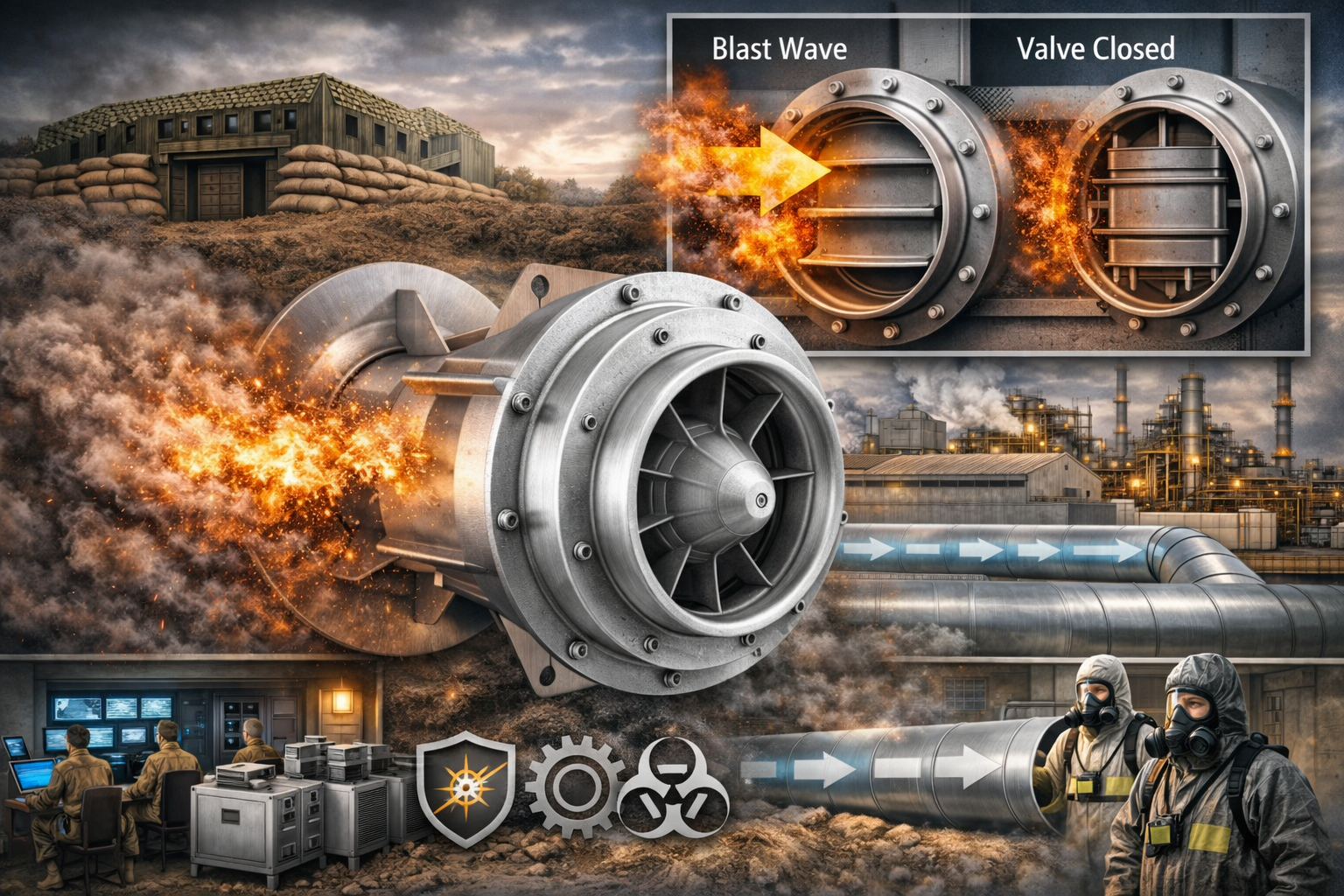
A blast valve is a critical safety component designed to protect buildings and ventilation systems from the destructive impact of explosions. These specialized devices are widely used in high-risk environments where maintaining safety, structural integrity, and operational continuity is essential. By preventing shock waves from entering through ventilation ducts, blast valves safeguard both human life and sensitive equipment.
In modern infrastructure, especially in defence, industrial, and secure facilities, ventilation openings are one of the most vulnerable points during an explosion. Without proper protection, high-pressure waves can travel through ducts and cause severe internal damage. Blast valves act as a protective barrier, automatically isolating internal environments from external blast forces and maintaining safe operational conditions.
A blast valve functions as a mechanical safety device installed within air ducts or ventilation openings. Under normal conditions, it allows free airflow to maintain proper ventilation inside a facility. However, when an explosion occurs, the sudden rise in pressure forces the valve to close instantly, blocking the incoming shock wave and preventing damage to internal systems.
The working principle of a blast valve is based on rapid pressure detection and mechanical response. During normal operations, the valve remains open to allow continuous airflow. When a blast wave enters the duct, it creates a sudden pressure surge that activates the internal mechanism. The valve plate or shutter closes immediately, sealing the duct and stopping the pressure wave from entering the protected area.
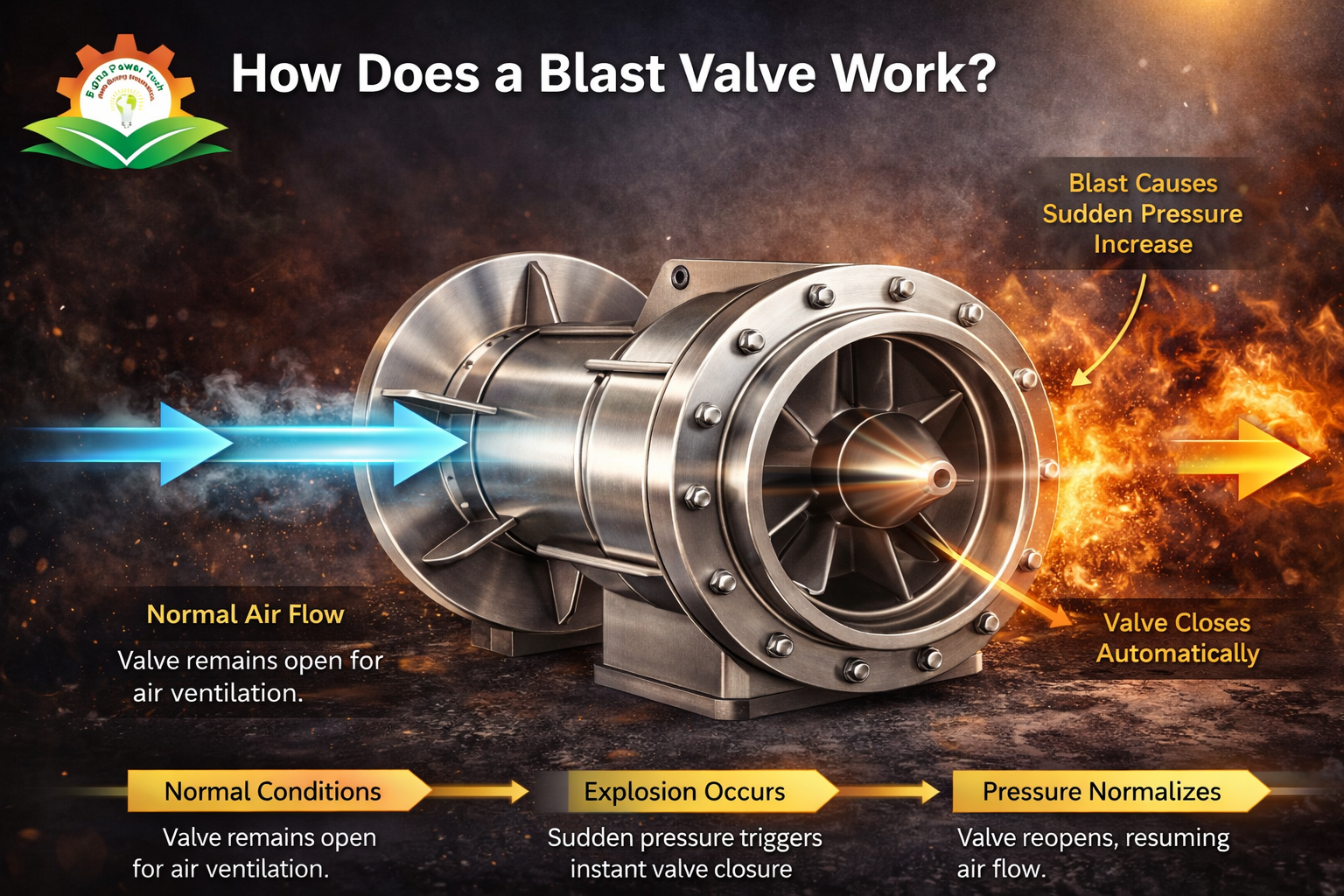
One of the key advantages of blast valves is their ability to operate without external power. This ensures reliable performance even during emergencies when electrical systems may fail. Once the pressure conditions return to normal, the valve resets automatically and resumes normal airflow, maintaining ventilation without manual intervention.
Blast valves are widely used in defence applications, including shelters, command centers, and underground protection systems. A properly designed blast valve for bunker applications ensures that occupants remain safe during explosive events by preventing high-pressure shock waves from entering enclosed spaces. This makes them an essential component in military and emergency preparedness infrastructure.
In industrial sectors such as chemical plants, refineries, and manufacturing units, blast valves help reduce the impact of accidental explosions. They protect ventilation systems and prevent damage to critical equipment, ensuring operational continuity and reducing downtime. Their robust construction allows them to withstand extreme pressure conditions in demanding environments.
Blast valves also play a crucial role in modern ventilation systems. When integrated into air management systems, a blast valve HVAC setup ensures both safety and efficiency. It allows normal airflow under standard conditions while providing immediate protection during sudden pressure surges, making it ideal for facilities that require controlled environments along with safety measures.
The installation of blast valves offers multiple benefits, including protection of ventilation systems, enhanced safety for occupants, and reduced risk of structural damage. They also help prevent the entry of hazardous contaminants into protected spaces, which is especially important in facilities dealing with sensitive or dangerous materials. Their automatic operation and low maintenance requirements make them a cost-effective long-term solution.
When considering implementation, understanding the blast valve price is important for planning and budgeting. The cost of a blast valve depends on various factors such as size, pressure rating, materials used, and specific application requirements. Although the initial investment may vary, the long-term benefits in terms of safety, reliability, and reduced damage costs make it a valuable addition to any high-risk facility.
Choosing the right partner for these systems is equally important. Reliable blast valve manufacturers ensure that products meet safety standards and perform effectively under extreme conditions. Expertise in design, engineering, and system integration plays a key role in delivering efficient and durable solutions tailored to specific project needs.
Blast valves are often integrated with advanced filtration and ventilation systems to provide comprehensive protection. This integration ensures that facilities remain operational while maintaining safe air quality during hazardous events. Such systems are particularly important in environments requiring protection from chemical, biological, or radiological threats.
Overall, blast valves are a fundamental component of modern safety and protection infrastructure. Their ability to respond instantly to explosive pressure waves, operate without external power, and maintain ventilation efficiency makes them indispensable in high-risk environments. Sigma Power Tech provides manufacturing and service solutions designed to deliver reliable blast protection, ensuring long-term safety and operational performance across critical applications.

 English
 Arabic
 Spanish
 Portuguese
 Deutsch
 Turkish
 Dutch
Dutch
 Italiano
 Russian
 Romaian
 Portuguese (Brazil)
 Greek
Greek