


How AI Is Transforming Clothing Design Software Development in 2026
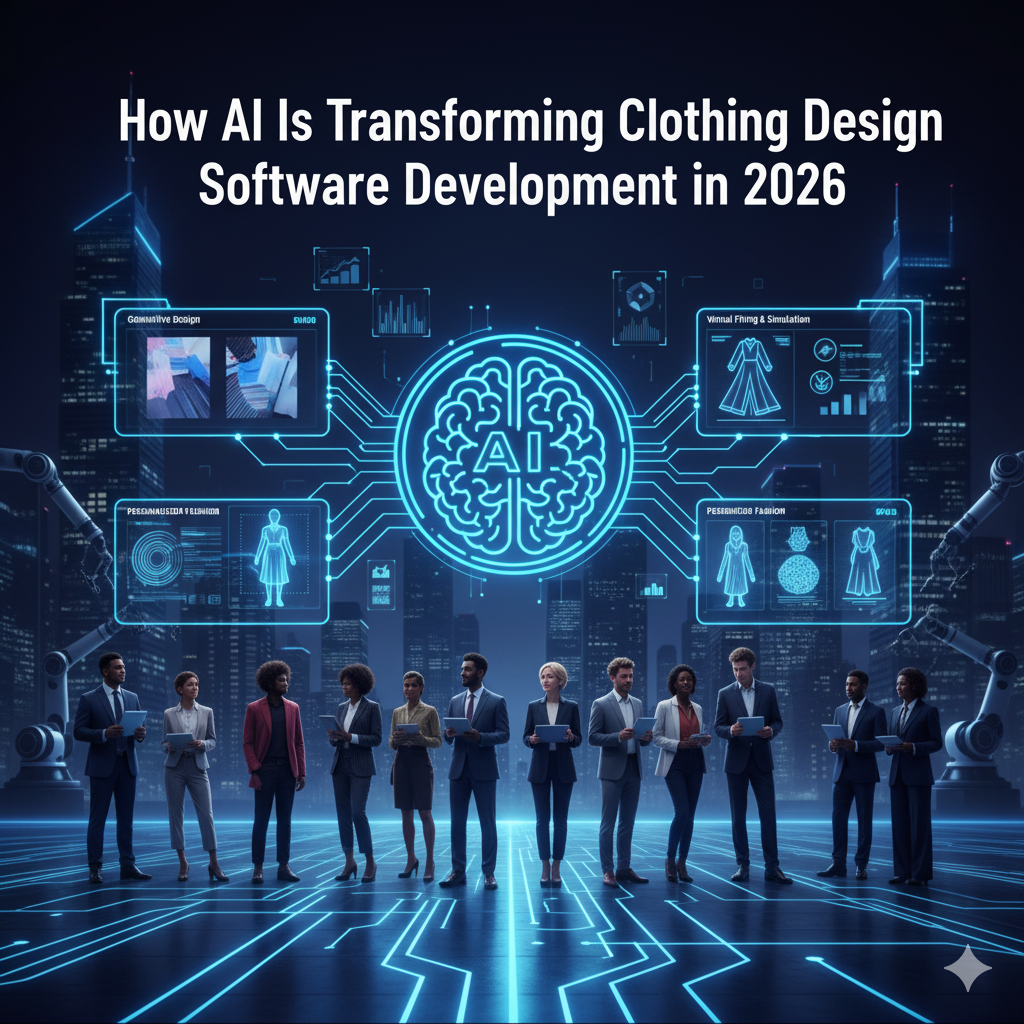
The fashion industry is undergoing one of the biggest technological disruptions in its history. What once relied primarily on manual sketching, fabric sampling, and human-driven creativity has now evolved into a dynamic, digital-first environment powered by artificial intelligence. In 2026, AI is not just an enhancement—it is redefining the very foundation of how clothing is conceptualized, designed, tested, and produced.
From generative design and 3D garment modeling to predictive forecasting and automated pattern generation, AI is accelerating the journey from concept to collection. As fashion brands compete for faster launch cycles, sustainability goals, and personalization, AI-powered clothing design tools are becoming critical. This transformation is also fueled by the rapid growth of specialized tech partners, including every generative AI Development Company and every clothing design software development company building next-generation digital solutions for fashion.
This comprehensive guide explores how AI is reshaping clothing design software development in 2026 and why fashion brands need to embrace this revolution to stay competitive.
1. AI-Powered Generative Design: A New Creative Frontier
Generative AI is redefining the creative process in fashion.
What Is Generative Design in Clothing?
Generative design uses AI models trained on thousands of clothing styles, fabrics, silhouettes, and patterns to create new and unique clothing designs in seconds.
What It Enables
-
Auto-generated design concepts
-
Style variations within seconds
-
New silhouettes inspired by trends
-
Completely original fashion items
-
Instant adaptation of designs for different body types
A generative AI Development Company can train custom models on:
-
A brand’s past collections
-
Global runway datasets
-
Trend reports
-
Seasonal inspirations
-
Customer preferences
This creates AI tools that produce designs maintaining a brand’s identity while introducing fresh creativity.
In 2026, generative design has become a co-creation partner—designers guide the AI, refine outputs, and choose the best variations.
2. Automated Pattern Making & Size Grading
Pattern creation has always been a time-consuming, highly specialized task. AI now automates it with remarkable accuracy.
AI Capabilities in Pattern Making
-
Convert sketches or 3D models into accurate, production-ready patterns
-
Automatically grade sizes for global markets
-
Adjust fit for different body shapes
-
Reduce manual errors and inconsistencies
For clothing manufacturers dealing with fast turnaround times, AI-based pattern generation eliminates the slowest stage in pre-production.
Every clothing design software development company is integrating:
-
AI-driven CAD tools
-
Smart size charts
-
Digital grading libraries
-
Virtual pattern validation
This automation reduces production time by up to 60% and significantly minimizes wastage.
3. Real-Time 3D Garment Simulation
In 2026, 3D garment simulation has become a must-have feature—not a luxury.
How AI Enhances Simulation
AI models analyze:
-
Fabric weight
-
Stretch
-
Drape behavior
-
Stitching patterns
-
Fit and movement
This enables unbelievably realistic simulations of how a garment will look on a model—even before a physical sample is created.
Benefits
-
Faster design approval
-
Fewer physical prototypes
-
Lower fabric wastage
-
Better cross-team collaboration
-
Accurate virtual merchandising
Brands can also test multiple fabrics, colors, and fittings in real time.
This AI-powered visualization is dramatically improving communication between designers, manufacturers, and marketing teams.
4. AI-Enhanced Fabric & Texture Digitization
Fabric digitization is one of the hottest AI use cases in 2026.
AI now analyzes fabric samples from photos, scans, or physical sensors to replicate:
-
Stretch
-
Texture
-
Shine
-
Weight
-
Density
-
Transparency
-
Embroidery & print details
This creates a highly accurate digital twin of the fabric.
Why This Matters
-
Perfect for virtual sampling
-
Useful in 3D modeling
-
Essential for digital fashion
-
Reduces the need for physical swatches
-
Supports metaverse fashion initiatives
For sustainability-driven brands, AI fabric digitization drastically cuts textile waste.
5. AI-Based Trend Forecasting & Consumer Insights
Fashion is built on trends—and trends shift fast.
AI now predicts upcoming trends with remarkable accuracy by analyzing:
-
Social media behavior
-
Search patterns
-
Runway collections
-
Cultural shifts
-
Market buying habits
-
Influencer activity
-
Retail sales reports
This allows brands to design collections that resonate with future consumer preferences—not past ones.
How It Strengthens Clothing Design Software
AI-powered dashboards help designers decide:
-
What colors will trend
-
Which silhouettes to avoid
-
What patterns to introduce
-
How to price new launches
-
When to release collections
This is transforming design teams into data-backed creative powerhouses.
6. Sustainable Design Through AI
With growing environmental concerns, sustainability has become a major priority in fashion.
AI contributes to sustainability by:
-
Reducing fabric wastage
-
Minimizing incorrect sampling
-
Optimizing patterns for efficient cuts
-
Predicting demand to reduce overproduction
-
Recommending eco-friendly materials
-
Helping brands measure carbon footprint
A custom sustainability module developed by a clothing design software development company allows brands to track:
-
Water usage
-
CO₂ emissions
-
Fabric wastage
-
Environmental impact per product
AI-guided sustainability tools are now essential for brands targeting eco-conscious consumers.
7. Personalized Fashion & Hyper-Customization
AI is enabling personalization at scale—something not possible before.
How personalization works
AI analyzes:
-
Body measurements
-
Shopping history
-
Preferences
-
Lifestyle
-
Style archetype
-
Local climate
And then recommends:
-
Designs
-
Fits
-
Fabrics
-
Complete outfits
Some brands are even offering AI-generated custom clothing for individual customers.
In 2026, personalization is no longer just an add-on—it’s a major selling point.
8. Virtual Try-On & AR Experiences Powered by AI
The rise of ecommerce and digital-first fashion is fueling AI-driven virtual try-on technology.
Using AR + AI, customers can:
-
Try clothes virtually
-
View fabric behavior
-
Rotate 360°
-
Adjust lighting
-
See color variations
-
Modify avatar body type
AI models improve accuracy by analyzing:
-
Body landmarks
-
Movement patterns
-
Fabric tension
-
Fit pressure points
Virtual try-on is boosting online conversions and reducing returns, making it essential for fast-growing brands.
9. End-to-End Automation in Clothing Design Workflow
AI is not limited to creative tasks—it's transforming operational workflows as well.
A full AI design pipeline includes:
1. Concept generation
AI generates design ideas based on trends.
2. Pattern creation
Patterns are automatically generated from concepts.
3. Fabric simulation
AI simulates how clothing will look and feel.
4. 3D modeling
Garments are visualized for sampling.
5. Fit prediction
AI estimates how designs fit different body shapes.
6. Production optimization
Layouts and cuts are automatically optimized.
7. Marketing automation
AI creates product descriptions, style stories, and lookbooks.
This end-to-end AI pipeline drastically reduces the time from design to market.
10. AI in Digital Fashion & Metaverse Clothing
The digital fashion economy is booming in 2026.
Brands now create:
-
Virtual outfits
-
Metaverse collections
-
NFT wearables
-
Gaming skins
-
Digital runway designs
AI accelerates digital fashion creation by auto-generating:
-
Avatar-compatible clothing
-
Animated fabrics
-
Stylized virtual outfits
-
High-res texture maps
A generative AI Development Company can train models specifically for digital fashion, giving brands an edge in the virtual economy.
11. AI + Human Creativity: A Collaborative Future
Despite all the advancements, AI is not replacing designers—it is amplifying their creativity.
Designers still lead by:
-
Setting creative direction
-
Choosing design concepts
-
Refining AI-generated ideas
-
Maintaining brand identity
AI acts as a co-designer, automating repetitive tasks and offering creative alternatives, but the human touch remains central to storytelling and brand emotion.
Why Fashion Brands Should Invest in AI-Powered Clothing Design Software in 2026
Here’s what AI-driven clothing design tools deliver:
✔ Faster time-to-market
✔ Reduced sampling and production cost
✔ Higher design accuracy
✔ Greater customer personalization
✔ Sustainability and lower fabric waste
✔ Real-time virtual visualization
✔ Improved design collaboration
✔ Better forecasting and sales predictions
✔ Competitive advantage in digital fashion
Brands adopting AI early are already leading the market with faster collections, more accurate trends, and reduced operational costs.
Conclusion
AI is transforming clothing design software development in ways that were unimaginable even a few years ago. Whether it's generative design, 3D simulation, sustainable production, or digital fashion creation, AI is at the center of fashion's evolution in 2026.
Fashion brands that embrace AI-powered tools—built in collaboration with a clothing design software development company or an advanced generative AI Development Company—will gain unmatched speed, creativity, and scalability in the years ahead.

 English
 Arabic
 French
 Spanish
 Portuguese
 Deutsch
 Turkish
 Dutch
Dutch
 Italiano
 Russian
 Portuguese (Brazil)
 Greek
Greek