


The Art of Construction: Inside the Manufacturing Process of Men’s Casual Suits
Modern menswear has shifted toward a more relaxed aesthetic, making the casual suit a staple in every professional wardrobe. However, "casual" does not mean "simple." The manufacturing process inside a high-end men’s casual suits manufacturer involves a sophisticated blend of traditional tailoring techniques and modern technology to ensure the perfect balance of comfort and structure.
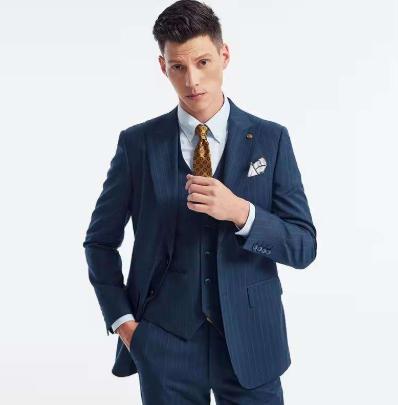
Material Selection and Fabric Preparation
The journey begins with sourcing the right textiles. Unlike formal evening wear, casual suits often utilize breathable, versatile fabrics like cotton blends, linen, or lightweight wool. Once the fabric arrives at the facility, it undergoes a rigorous inspection and pre-shrinking process. This step is vital because natural fibers used in casual tailoring are prone to shifting; by stabilizing the fabric before cutting, the manufacturer ensures that the finished garment maintains its shape even after multiple wears and dry cleanings.
Precision Pattern Making and Cutting
Once the fabric is ready, the design team uses CAD (Computer-Aided Design) software to create digital patterns. These patterns are engineered to provide a "soft" silhouette—less padding than a tuxedo but enough structure to look sharp. In a professional manufacturing environment, these patterns are laid out on the fabric using automated markers to minimize waste. High-precision laser cutters or CNC machines then slice through layers of fabric with millimeter accuracy, ensuring every sleeve, lapel, and pocket flap is identical across the entire production run.
The Assembly and Soft-Structure Sewing
The sewing phase is where the casual suit takes its form. Manufacturers specializing in casual styles often use "unconstructed" or "half-canvased" methods. This involves using lighter interlinings and fewer shoulder pads to create a jacket that feels as comfortable as a cardigan but looks like a suit. Skilled operators use specialized machines to handle delicate seams, such as the pick-stitching often found on lapels, which provides that sought-after "hand-finished" look that brands and retailers demand.
Pressing, Finishing, and Quality Control
The final stage of production is more than just a quick steam. Each suit undergoes "under-pressing" during assembly and a final "top-pressing" once completed. This 3D molding process gives the suit its final shape and drape. Before the suits are packaged, they pass through a final quality control station where technicians check for thread tension, button security, and measurement accuracy. This meticulous attention to detail ensures that the casual suit meets the high standards of international retailers before it ever leaves the factory floor.

 English
 Arabic
 Spanish
 Portuguese
 Deutsch
 Turkish
 Dutch
Dutch
 Italiano
 Russian
 Romaian
 Portuguese (Brazil)
 Greek
Greek