


Concrete Estimating Services Explained: What They Are and How They Work
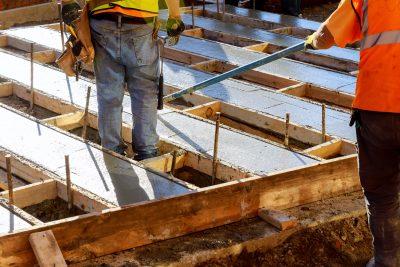
In the fast-paced world of construction, accuracy and efficiency are everything. One small mistake in your concrete estimate can lead to massive project delays, budget overruns, or even contract disputes. That’s why concrete estimating services have become essential for contractors, builders, and project managers across the United States.
In this article, we’ll explain what concrete estimating services are, how they work, and why they’re so important for modern construction projects. Whether you’re a small contractor or a large construction firm, understanding these services can save you both time and money.
What Are Concrete Estimating Services?
Concrete estimating services are specialized professional solutions that calculate the exact amount of materials, labor, equipment, and costs needed for concrete-related construction work. These services are often provided by expert estimators who use advanced software tools to deliver precise and detailed cost breakdowns.
Concrete estimating involves much more than just counting cubic yards of concrete. It also includes:
-
Material takeoffs: Measuring and listing all the concrete, rebar, formwork, and finishing materials needed.
-
Labor estimation: Calculating the man-hours required for placing, finishing, and curing concrete.
-
Equipment estimation: Identifying and pricing out the machinery (mixers, pumps, vibrators) required.
-
Cost forecasting: Providing a realistic cost projection that includes overhead, waste, and profit margins.
In short, these services ensure your bid is competitive, your budget is accurate, and your project runs smoothly.
Why Are Concrete Estimates So Important?
When it comes to construction, the foundation is everything — literally and financially. Concrete is one of the most expensive and crucial materials in any project. A single miscalculation can cause major financial strain.
Here’s why accurate concrete estimation is vital:
-
Budget Control – Estimators help you plan your finances effectively by giving you a clear picture of expected costs.
-
Competitive Bidding – Accurate estimates mean you can bid confidently and win more projects.
-
Waste Reduction – You only order the exact quantity of materials required, preventing unnecessary waste.
-
Time Management – Estimations help schedule labor, deliveries, and equipment efficiently.
-
Improved Profit Margins – By avoiding overages and underbidding, you protect your profit margins.
Without precise estimation, contractors risk losing bids, overspending on materials, or failing to meet client expectations.
How Do Concrete Estimating Services Work?
The process of concrete estimating is a systematic and data-driven approach that combines engineering principles, cost databases, and project-specific details. Here’s a step-by-step breakdown of how professional concrete estimating services typically work:
1. Project Document Review
The estimator begins by reviewing all project documentation, including:
-
Architectural and structural drawings
-
Specifications and blueprints
-
Project scope and requirements
This step ensures the estimator understands the full scope of the work, the type of concrete being used, and any special design or reinforcement requirements.
2. Quantity Takeoff (QTO)
In this stage, the estimator calculates the exact quantities of materials needed. This includes:
-
Concrete (in cubic yards or cubic meters)
-
Rebar or steel reinforcement
-
Formwork materials
-
Finishing materials like sealants or coatings
Modern estimating software like PlanSwift, Bluebeam Revu, or RSMeans allows estimators to perform digital takeoffs quickly and accurately using CAD or PDF drawings.
3. Labor and Equipment Estimation
The estimator then assesses how many workers will be needed and for how long. This includes:
-
Concrete placement and finishing crews
-
Equipment like cranes, pumps, or mixers
-
Curing time and scheduling
By considering labor productivity rates, local wage data, and crew efficiency, the estimator determines realistic costs and timelines.
4. Costing and Pricing
Once the quantities and labor requirements are known, the estimator applies unit rates for materials, labor, and equipment. This stage includes:
-
Material pricing: Based on supplier quotes or cost databases
-
Labor rates: Depending on location and skill level
-
Equipment costs: Rental or ownership costs
-
Overheads and profit margins: Added to ensure business sustainability
This creates a complete cost breakdown — often formatted in spreadsheets or estimating software — that can be submitted as part of a construction bid or internal budget plan.
5. Final Review and Report
Before submission, the estimator reviews the entire document for accuracy, consistency, and completeness. The final estimation report includes:
-
Detailed material takeoffs
-
Labor and equipment costs
-
Total estimated project cost
-
Project timeline and assumptions
This report gives contractors, project owners, and stakeholders a comprehensive understanding of the project’s financial requirements.
Tools and Software Used in Concrete Estimating
Technology has revolutionized the estimating industry. Today’s professional estimators use sophisticated software tools to enhance precision and speed. Popular tools include:
-
PlanSwift – For digital takeoffs and cost estimation.
-
Bluebeam Revu – For blueprint measurement and markup.
-
STACK – Cloud-based platform for takeoffs and estimates.
-
RSMeans Data Online – Provides up-to-date construction cost data.
-
Trimble Estimation – Integrates 3D modeling with cost data.
Using these tools, estimators can identify potential cost overruns before the project starts, reducing risk for contractors and clients alike.
Who Uses Concrete Estimating Services?
Concrete estimating services are beneficial to a wide range of professionals and organizations, including:
-
General Contractors: For accurate project bidding and cost control.
-
Subcontractors: To determine competitive pricing for their scope of work.
-
Developers: To assess project feasibility and financial viability.
-
Architects and Engineers: To validate design-related costs.
-
Project Managers: For budgeting, forecasting, and resource allocation.
Whether it’s a small residential foundation or a large commercial structure, concrete estimating services help all stakeholders stay aligned financially.
Benefits of Outsourcing Concrete Estimating Services
Many construction companies choose to outsource their estimating tasks to specialized firms. Here’s why outsourcing is often a smart decision:
-
Cost-Effective: Hiring an in-house estimator can be expensive. Outsourcing provides access to experts at a lower cost.
-
Expertise: Estimating firms employ trained professionals familiar with the latest codes, methods, and software.
-
Time Savings: Outsourcing frees up your team to focus on execution and project management.
-
Scalability: You can easily scale up or down depending on project workload.
-
Reduced Errors: Professional estimators ensure precision and minimize the risk of costly miscalculations.
Outsourcing also allows contractors to submit bids faster — a crucial advantage in competitive markets.
Conclusion
Concrete estimating services play a critical role in ensuring construction projects are planned, priced, and executed accurately. From quantity takeoffs to cost forecasting, these services help contractors make data-driven decisions, control budgets, and deliver projects on time.
Whether you handle small residential jobs or large-scale commercial builds, investing in professional estimating services can significantly improve your efficiency, reduce waste, and maximize profits.
So, the next time you prepare a construction bid, remember — an accurate estimate isn’t just a number; it’s the foundation of a successful project.

 English
 Arabic
 French
 Spanish
 Portuguese
 Deutsch
 Turkish
 Dutch
Dutch
 Russian
 Romaian
 Portuguese (Brazil)
 Greek
Greek