Hyundai vehicles are known for their efficiency, modern design, and overall reliability. However, like any automobile brand, certain mechanical issues can develop over time. Being aware of these common problems helps owners take timely action and avoid expensive repairs. This guide focuses strictly on the most reported issues, giving you a clear and detailed understanding of what can go wrong inside a Hyundai Engine and how these problems affect performance.
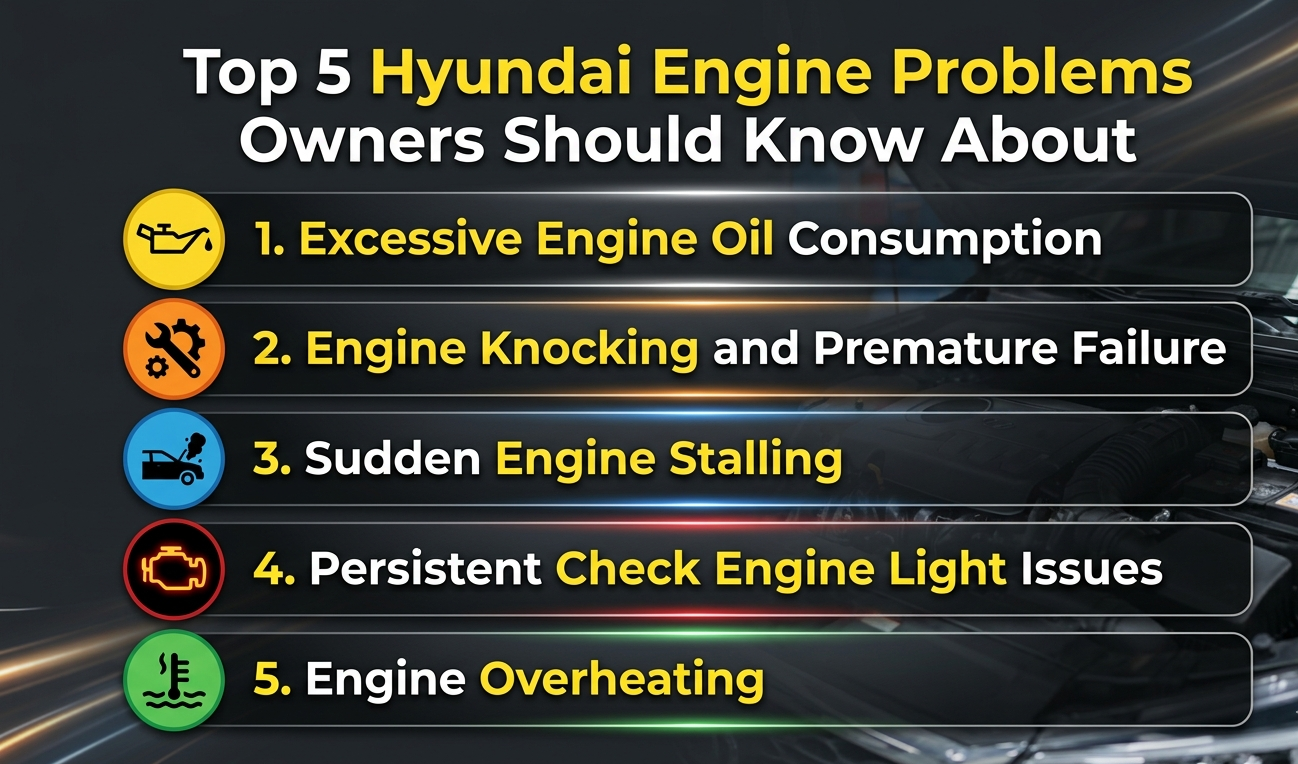
1. Excessive Engine Oil Consumption
Excessive oil consumption is one of the most frequently reported concerns among Hyundai owners. This issue often develops slowly, which makes it difficult to detect in the early stages. It typically occurs when internal components such as piston rings or valve seals begin to wear out. When this happens, oil starts leaking into the combustion chamber, where it burns along with fuel.
As the problem progresses, drivers may notice that their vehicle requires frequent oil refills despite no visible leaks. This can be confusing and frustrating, especially for those who regularly maintain their vehicles. In some cases, faint blue smoke may appear from the exhaust, indicating that oil is being burned internally. Models equipped with the hyundai sonata engine have reported such issues, making it important for owners to stay alert.
If ignored, low oil levels can reduce lubrication, increase friction, and cause significant damage to internal parts. Over time, this may lead to severe wear or even total engine failure. Regular monitoring of oil levels is essential to prevent long-term damage to a Hyundai Engine.
2. Engine Knocking and Premature Failure
Engine knocking is a serious issue that can lead to major mechanical failure if not addressed promptly. It is usually identified by a repetitive metallic tapping or knocking sound coming from the engine, especially during acceleration. This sound is often caused by abnormal combustion or worn-out internal components such as bearings.
In some cases, the problem has been linked to manufacturing defects or leftover debris inside the engine. These contaminants can interfere with proper lubrication, causing increased friction and gradual damage over time. As the condition worsens, the knocking sound becomes louder and more frequent.
Vehicles equipped with the hyundai elantra engine have also experienced similar problems, highlighting the importance of early diagnosis. Many drivers initially ignore the sound, assuming it is harmless, but doing so can result in complete engine failure. Once the damage becomes severe, repairing the system may no longer be possible, leaving replacement as the only option. Such failures significantly impact the durability of a Hyundai Engine if not handled in time.
3. Sudden Engine Stalling
Sudden engine stalling is another major problem that can compromise both safety and driving comfort. This issue occurs when the engine unexpectedly shuts off while driving or even when the vehicle is idling. The causes can vary, ranging from faulty sensors to fuel system disruptions or electrical faults.
What makes this issue particularly dangerous is its unpredictability. A vehicle may function normally and then suddenly lose power without warning. This can be especially risky when driving at high speeds or in heavy traffic conditions. In many cases, the engine may restart after a few attempts, but the root cause remains unresolved.
For many drivers, this problem creates a sense of uncertainty and lack of confidence in the vehicle. It is not just an inconvenience but also a safety concern that requires immediate attention. When such stalling issues occur, they often indicate underlying faults affecting the overall reliability of a Engine, making professional inspection essential.
4. Persistent Check Engine Light Issues
The check engine light is designed to warn drivers about potential problems, but in many Hyundai vehicles, it can become a recurring issue. While the light may sometimes indicate minor concerns, it can also signal deeper mechanical or electronic faults that need attention.
Many drivers tend to ignore the warning if the car appears to be running normally. However, the light often acts as an early indicator of issues that may not yet be visible. These can include problems with sensors, ignition components, or emission systems. Over time, ignoring these warnings can allow minor faults to develop into serious complications.
A persistent warning light should never be overlooked, as it may point to hidden inefficiencies or internal damage. Addressing the issue early can prevent more extensive repairs later. In many cases, this warning is directly tied to performance irregularities within a Hyundai Engine, making timely diagnostics crucial.
5. Engine Overheating
Engine overheating is one of the most critical problems a vehicle owner can face. It occurs when the engine temperature rises beyond safe operating levels, often due to failures in the cooling system. Common causes include coolant leaks, malfunctioning thermostats, or issues with the radiator or water pump.
As the engine heats up, the internal components begin to expand, which can lead to severe damage if the temperature is not controlled. Drivers may notice warning signs such as a rising temperature gauge, steam from under the hood, or unusual smells. These symptoms should never be ignored, as they indicate an urgent problem.
Prolonged overheating can warp metal components, damage the head gasket, and even cause complete engine breakdown. Even a single overheating incident can have lasting effects on performance and reliability. Protecting a Engine from excessive heat is essential to maintaining its longevity and efficiency.
Conclusion
Understanding these common problems allows Hyundai owners to stay prepared and take preventive measures before minor issues turn into major repairs. Each of these concerns—whether it is oil consumption, knocking, stalling, warning lights, or overheating—can significantly affect performance if ignored.
Staying proactive with maintenance and addressing warning signs early can make a significant difference in vehicle lifespan. In case of severe damage or replacement needs, reliable sources like Moon Auto Parts can help ensure access to quality components that keep your vehicle running efficiently.
Frequently Asked Questions (FAQs)
1. How do I perform a Hyundai engine recall VIN check?
You can check for recalls by visiting Hyundai’s official website and entering your vehicle’s VIN. This will show if your vehicle is affected by any engine-related issues.
2. What is the average Used Hyundai engine price?
The cost depends on the model and whether you choose a used, rebuilt, or new engine. Prices can vary widely based on condition and availability.
3. Which Hyundai engine parts commonly fail?
Commonly affected parts include piston rings, sensors, timing components, and cooling system elements.
4. Why is my engine light on in my Hyundai?
The check engine light may appear due to minor issues like a loose fuel cap or more serious mechanical problems that require diagnostic scanning.
5. How serious are Hyundai engine problems?
Some issues are minor and easy to fix, while others can lead to major damage or complete failure if not addressed promptly.




 English
 Arabic
 French
 Spanish
 Portuguese
 Turkish
 Dutch
Dutch
 Italiano
 Russian
 Romaian
 Portuguese (Brazil)
 Greek
Greek