


How to Fix Uneven Hot Water in Different Room
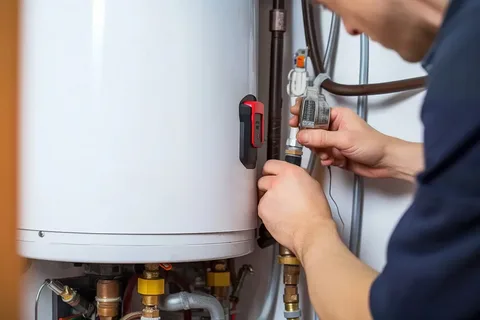
If one bathroom gets steamy showers while another only gets lukewarm water, it’s more than annoying. It can also waste time, water, and patience—especially on busy mornings. Uneven hot water usually has a simple cause, like distance, pipe heat loss, or a setting that’s off. However, it can also point to a part wearing out inside the tank or tankless unit. In this guide, you’ll learn practical fixes you can try today, plus clear signs that a water heater repair service Roswell is the smarter next step.
When to Call a Water Heater Repair Service Roswell for Uneven Hot Water
Sometimes the quick fixes don’t last, and that’s your clue. If you keep adjusting the temperature, but one room still runs cold, the heater may be struggling to keep up. For example, if your teen takes a long shower and the guest bath turns icy right after, the recovery rate may be too slow. Also, popping sounds, rusty water, or small leaks can mean the problem is inside the heater, not the faucet. Because water and electricity (or gas) don’t mix well, getting help early is safer.
Start With the Simple Stuff: Fixtures and Settings
Before you blame the heater, check the easy wins. A clogged faucet aerator or showerhead can change flow and make water feel cooler. Also, some single-handle faucets have a temperature limit stop that blocks full hot. If you want a local pro to double-check these basics, water heater repair service Roswell can help you rule out the small issues fast.
-
Clean aerators and showerheads (mineral buildup is common).
-
Confirm the heater thermostat is set to a steady temperature.
-
Check that shutoff valves under sinks are fully open.
-
Make sure no one recently “turned it down to save money.”
Understand Distance: Why Far Rooms Lose Heat
Hot water cools as it travels. So, the bathroom closest to the heater often wins, while the farthest room gets “warm-ish” water. This is even more obvious in winter, because cold pipes steal heat quickly. A common homeowner moment: you turn on the shower upstairs, and by the time it warms up, you’re already late. If you notice this pattern, the system may be working normally—just inefficient. Insulating exposed hot-water pipes can help, and so can shortening “wait time” with better circulation.
Check for Crossover: Cold Water Mixing into Hot
A sneaky cause of uneven hot water is a “cross connection,” where cold water pushes into the hot line. This can happen through a worn mixing valve, a faulty single-handle faucet, or a shower cartridge that’s failing. As a result, one room may feel fine while another never gets truly hot. If you’ve tried basic fixture checks and still suspect mixing, it’s smart to call the best water heater repair near Roswell GA for proper testing, because tracking crossover can take the right tools and a clear process.
Sediment Buildup: The Hidden Heat Thief
If you have a tank water heater, sediment can build up at the bottom over time. That layer makes it harder to heat water evenly, so the supply can feel weak or inconsistent. You might also hear rumbling or popping during heating cycles. Flushing the tank helps in many homes, especially if you have hard water. However, if the drain valve is stuck or the unit is older, forcing it can cause leaks. That’s also when a water heater repair service can handle it safely and check for damage you can’t see.
Tankless Trouble: Flow Sensors and Scale
Tankless systems can also cause uneven hot water, especially when scale builds up inside the heat exchanger. Then the unit may “throttle” heat or shut off briefly, so one shower goes warm-cold-warm. Another common issue is a dirty inlet filter or a flow sensor that misreads demand. If you’re seeing error codes, or the unit acts up only when multiple taps run, a trained tech is worth it. Many homeowners choose water heater repair service Roswell for descaling, sensor checks, and stable performance without guesswork.
Pressure and Demand: When the System Can’t Keep Up
Sometimes the heater is fine, but the home’s demand is too high at the same time. For instance, running the dishwasher, laundry, and two showers can split hot water and make far rooms suffer first. Low water pressure can also change how mixing valves behave, which makes temperature feel jumpy. Try spacing out heavy hot-water tasks, because it can smooth things out right away. If you want longer-term improvements, consider these upgrades:
-
Add pipe insulation in unheated areas.
-
Install a thermostatic mixing valve (done by a pro).
-
Upgrade to a larger tank or a properly sized tankless unit.
Ready for Even Hot Water Every Time?
Uneven hot water doesn’t have to be your “normal.” Small steps like cleaning fixtures and insulating pipes can help fast, and bigger fixes like flushing sediment or correcting crossover can make the change stick. If you want the problem handled without stress, SP Heating & Air can inspect the system, explain what’s happening in plain language, and get your hot water consistent again.

 English
 Arabic
 French
 Spanish
 Portuguese
 Deutsch
 Turkish
 Dutch
Dutch
 Italiano
 Russian
 Romaian
 Portuguese (Brazil)